
Section 2 of AS/NZS 3000:2018, protection and switchboards: eCertify lists 63 of 101 marked changes since 2007 and explains each one in one plain sentence.
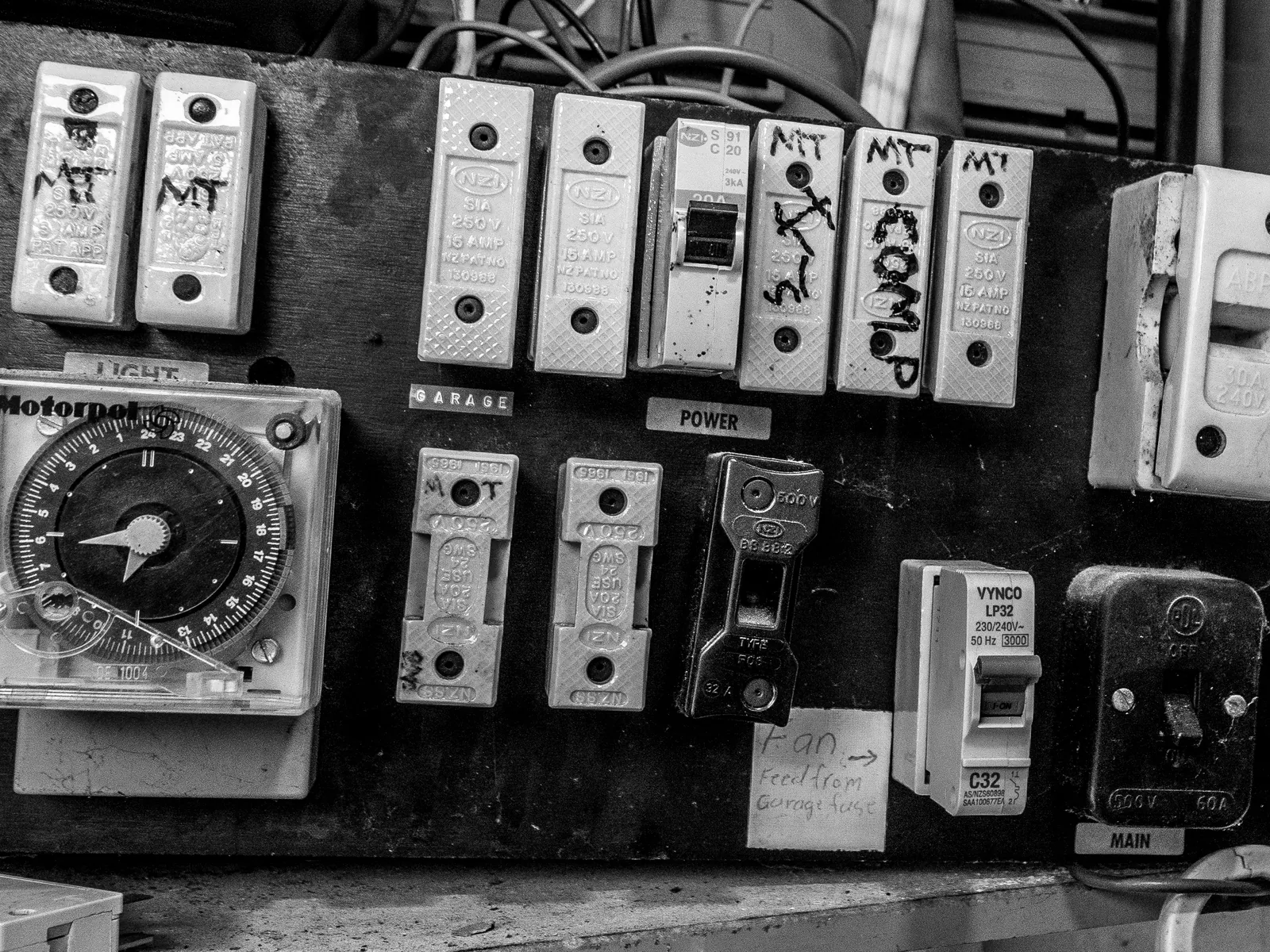
This page is part of eCertify's guide to what changed from AS/NZS 3000:2007 to 2018. It covers Section 2, which the standard calls General arrangement, control and protection: how circuits are arranged, isolation and main switches, overcurrent protection and discrimination, RCDs, arc fault detection devices and switchboards.
AS/NZS 3000:2018 marks 101 items in Section 2 as changed. This page lists 63 of 101 marked changes; the other 38 are purely editorial, such as renumbering, new headings over unchanged text and corrected cross-references. eCertify read every one against the 2007 edition or the amendment itself. The substance is in main switches, discrimination, RCDs, the new AFDD clauses and switchboard access, and New Zealand modifies three of the RCD clauses.
eCertify's short version of what Section 2 now asks of you on the job:
The 2018 edition prints an asterisk in the margin wherever it changed a clause, table or figure significantly from 2007, and each amendment marks its own edits with a tagged bar. A mark shows where something changed, not what changed. eCertify therefore set each marked Section 2 item beside its 2007 counterpart, read each amendment-only item against that amendment's own instructions, and wrote the difference up in one plain sentence. Unmarked edits are not listed, and neither are marked ones that only renumber, retitle or tidy the wording.
The clause numbers and headings are the standard's, and the sentences are eCertify's. Check the standard itself before you rely on a detail on the job.
New Zealand check: the Electricity (Safety) Regulations 2010 modify the Wiring Rules for New Zealand in their Schedule 2, and three of the items below are covered by those modifications: the RCD type rule in clause 2.6.2.2.3(b), an exception in clause 2.6.3.3.2 and the whole of clause 2.6.3.3.3. Each of those sentences gives the New Zealand position. A fourth modification switched off the neutral and PEN switching ban in clause 2.3.2.1.2 from 13 November 2025, and the Electricity (Safety) Amendment Regulations 2026 revoked it from 2 October 2026, so the printed ban applies again. Seven of the items are Australia only and are labelled that way. Under Schedule 1AA of the 2010 regulations, complying with the 2007 edition stopped counting as compliance at the close of 12 November 2026.
Jordan Statham, eCertify's director, is an EWRB-registered electrical inspector. eCertify's visual switchboard check for Auckland homes looks at the board for problems this section deals with, such as missing RCD protection, and tells you in writing whether it needs work. It is visual only and does not include testing.
eCertify's side-by-side read found four changes of substance in how an installation is split into circuits and sized. Maximum demand calculation guidance still sits in Appendix C, covered on eCertify's page of AS/NZS 3000 appendix changes.
Clause 2.1.2, Selection and installation. A new item (f) means switchgear and controlgear must also go in to the manufacturer's instructions, not only to Section 2, which the 2007 list did not say.
Clause 2.2.1.2, Origin of submains and final subcircuits. New in 2018: every submain and final subcircuit has to start at a main or distribution switchboard, with all of its live conductors connected at that one board, and 2007 had no such rule.
Clause 2.2.1.4, Electric vehicle charging circuits. A new clause that sets no rule of its own but sends New Zealand installers to clause 7.9 for circuits supplying EV charging (see Section 7, solar, EV and special installations), a topic the 2007 edition did not cover.
Clause 2.2.2, Maximum demand. When maximum demand is found by measurement, the reading is now the highest consumption sustained over 30 minutes, where 2007 used any 15 minute period.
eCertify found five marked items here that change what you do at the board, including a ban New Zealand lifted in November 2025 and restored in October 2026.
Clause 2.3.2.1.2, Alternating current systems. A new note says actives come off before neutrals and go back on after them, and the unchanged ban on switching a consumer mains neutral, PEN or earthing conductor, lifted in New Zealand from 13 November 2025, applies again from 2 October 2026.
New Zealand disapplied this ban from 13 November 2025 on WorkSafe's recommendation. WorkSafe has said, in replies to Official Information Act requests, that it was a preparatory step towards two future uses: open-PEN detection devices that cut an EV charger off from the installation earth if the supply neutral breaks, and island-mode backup from solar, batteries or a generator. The NZ Electrical Inspectors Association and Engineering New Zealand, among others, warned that opening the PEN can make earthed metalwork live with no fault present, and MBIE restored the ban from 2 October 2026, citing "significant concern within the sector about whether it can be used safely" and "little to no uptake". Work installed before then can stay only if it is not electrically unsafe and complied with the rules at the time.
Clause 2.3.3.2, General. A main switch for an alternative or supplementary supply may now be at any switchboard in the installation if it is fitted to the relevant standard (AS/NZS 3010 or AS/NZS 4777.1, for instance), where 2007 only pointed to those standards.
Clause 2.3.3.4, Location and operation. A main switch must now be worked by a manual, single-action mechanical handle or button, and a touch screen or programmable control system cannot be the way you operate it, which 2007 did not address.
Clause 2.3.3.5, Identification. A main switch for an alternative or supplementary supply now has to be labelled with the energy source it controls, a marking missing from the 2007 list.
Clause 2.3.3.6, Remote control. Where remote control can close a main switch, programmable control systems must not be able to override or bypass that switch, and touch-screen remote control brings in the manual handle rule of clause 2.3.3.4, both new against 2007.
eCertify counted three marked items in the overcurrent clauses that go beyond renumbering, two of them about consumer mains. How mains work is inspected and certified is set out in eCertify's guide to high-risk electrical work and mains inspections.
Clause 2.5.1.2, Consumer mains. The clause itself now says unprotected consumer mains are those with no service protective device ahead of them, and its notes recommend settling arrangements with the electricity distributor at the planning stage.
Figure 2.1, Protected and unprotected consumer mains. New against 2007, and reissued whole by Amendment 1: typical supply arrangements showing which consumer mains a service protective device covers and which it leaves unprotected.
Clause 2.5.4.2, Characteristics of short-circuit protective devices. Moved up from 2007's clause 2.5.4.5, and the note behind the example K value of 111 for PVC-insulated copper now bases it on a 75°C starting conductor temperature for sizes up to 300 mm², not a 40°C ambient.
eCertify compared each overcurrent drawing with its 2007 counterpart: seven now carry new examples or labels, though the rules they illustrate did not change.
Figure 2.2(B), Low breaking capacity backup. New: a device rated 15 kA on a 30 kA fault level, backed up by a supply-side short-circuit device of 30 kA or more, with their let-through energy coordinated.
Figure 2.3, Mandatory omission examples. Certain safety services supplies, and supply or control circuits to protective devices, join the drawn examples of circuits where losing supply is the greater danger.
Figure 2.4, Motor overload example. A worked example lets the supply-end device be rated above the motor's overload relay to ride through starting current, provided it still clears a short circuit at the motor end.
Figure 2.5, Switchboard submain example. A worked example: a board of ten 10 A circuits needs no overload device at the start of a submain rated 100 A.
Figure 2.6, Tee-off circuit example. A worked example: a 1.5 mm² tee-off from a 2.5 mm² circuit needs no device of its own when the upstream device is rated 16 A.
Figure 2.7, Fixed load overload omission. Now ties the omission to the conductor being rated for the fixed load it feeds, names resistive heating beside water heaters, and was reissued by Amendment 1.
Figure 2.9, Source to switchboard conductors. Adds that overload protection for the conductors from a source of supply to its switchboard may be built into the source equipment or sit at the switchboard.
eCertify found three marked items on internal arcing faults in big switchboards, and Amendment 3 edited this clause again.
Clause 2.5.5, Protection against switchboard internal arcing fault currents. The trigger is now a switchboard rated at 800 A per phase or more, where 2007 spoke of heavy current boards, defined by a nominal supply current of at least 800 A per phase.
Clause 2.5.5.2, Reduction of the probability of the initiation of a switchboard internal arcing fault. Internal separation in those boards is now specified to AS/NZS 61439.2 rather than 2007's AS/NZS 3439.1, and the functional unit item points to the new Figure 2.11.
Figure 2.11, Parts of a functional unit. New: a drawing of a functional unit's element and compartment, marking the tee-off conductors that sit outside the unit.
eCertify's read found new ratios, an exemption for small breakers and drawings split by rating band. A new note in clause 2.5.7.2.3 says the discrimination requirements are not retrospective.
Clause 2.5.7.2.1, General. Backup (cascading) protection is now explained through let-through energy and the downstream device's peak withstand, discrimination gains the name selectivity, and manufacturer's data is recommended where available.
Clause 2.5.7.2.2, Safety service circuit discrimination (selectivity). Both safety service tests now apply together, where 2007 joined them with "or", and discrimination up to the arcing fault level, deemed 30% to 60% of prospective short-circuit current, moves from a note into the rule.
Clause 2.5.7.2.3, General supply circuit discrimination (selectivity). Breaker discrimination below 800 A is now deemed met when the upstream breaker is at least 1.5 times the downstream one, where 2007 used 1.6 times from 250 A and 2 times below, and a downstream breaker of 80 A or less is exempt.
Figure 2.14, Breakers at 800 A and above. Now a drawing of its own for this band, with discrimination needed between overload curves and instantaneous settings but not above the arcing fault current.
Figure 2.15, Breakers from 250 A to 800 A. A drawing of its own for this band, showing an upstream breaker of at least 1.5 times the downstream one as compliant.
Figure 2.16, Breakers under 250 A. Reissued by Amendment 1: the same 1.5 times test for breakers under 250 A, with a pointer to the 80 A exemption.
eCertify's comparison found the RCD type rules rebuilt country by country, with New Zealand's version then modified by Schedule 2. eCertify's guide to RCD testing and RCD types in New Zealand covers Types A, F and B in more depth.
Clause 2.6.2.2.1, General. IEC 62423 joins the accepted RCD product standards, and Amendment 2 adds a recommendation, not a requirement, that Type A be the general-purpose type.
Clause 2.6.2.2.2, Australia only. Applies in Australia only, not New Zealand: after a 24-month transition from Amendment 2's 2021 publication, Type AC RCDs, which respond only to a.c. residual current, may no longer be installed there.
Clause 2.6.2.2.3, New Zealand only. In New Zealand every RCD the standard calls for must now open active and neutral, where 2007 asked that only of socket-outlet and medical RCDs, and as Schedule 2 modifies item (b) it must be Type A, F or B.
New Zealand's RCD installation rules now have their own clause, 2.6.3.3, and eCertify found five marked items that change where you fit RCDs. Testing them is covered on eCertify's Section 8, verification and testing page.
Clause 2.6.3.1, General. A new opening clause says these RCD rules add to those in other standards, other Sections and legislation, and a New Zealand note points to NZECP 55 for wiring near conductive thermal insulation.
Clause 2.6.3.3.1, Residential installations. Residential socket, lighting and hand-held circuits still need 30 mA RCDs, with a new exception for separated or extra-low-voltage supplies, and a cooking socket's marking no longer has to say it lacks RCD protection.
Clause 2.6.3.3.2, Non-residential installations. Sockets up to 30 A in schools, childcare and tertiary teaching areas, outdoors, public areas and damp zones now need 30 mA RCDs, as do rides and vending machines, and Schedule 2 ends the IT and cleaning socket exemption from the 10 mA rule.
Clause 2.6.3.3.3, Home care installations. As Schedule 2 rewrites it for New Zealand, home care medical equipment installed to AS/NZS 3003 need not meet the residential RCD clause, and 2007's dedicated circuit and patient-reset details are gone.
Clause 2.6.3.3.4, Additions and alterations. Sockets added to an existing circuit now follow the RCD rules for a new circuit in that part of the installation, and a new note lets the RCD sit where the added wiring starts.
These six marked items apply in Australia only, not New Zealand. eCertify lists them so the count matches the standard, and none of them is a New Zealand rule.
Clause 2.6.3.2.2, Domestic and residential installations, Australia only. In Australia, 30 mA RCD protection now covers every final subcircuit in domestic and residential installations, where 2007 named only socket, lighting and hand-held circuits.
Clause 2.6.3.2.3.2, Location of RCD protection, Australia only. In Australia, a non-domestic circuit's RCD now goes at the originating switchboard unless extra mechanical protection on the wiring allows it at the socket-outlet or equipment.
Clause 2.6.3.2.3.3, Requirements for additional protection, Australia only. In Australia, non-domestic RCD protection now reaches final subcircuits rated up to 32 A and equipment with an increased shock risk, where 2007 used a 20 A limit.
Clause 2.6.3.2.4, Home care installations, Australia only. In Australia, the home care clause now refers RCD requirements to AS/NZS 3003 instead of setting out the 2007 dedicated circuit and patient-reset rules.
Clause 2.6.3.2.5, Alterations to installations and replacement of switchboards, Australia only. In Australia, alterations follow the RCD rules for the installation type, and RCDs for added sockets, equipment or lighting points in homes go at the circuit's origin.
Clause 2.6.3.2.6, Repairs, Australia only. In Australia, Amendment 2 rewrote the repairs exemption around like-for-like replacements, single-to-multiple socket swaps and an unswitched socket at a roof-space or high lighting point.
AFDDs are new to the standard, and eCertify found six marked items on them. eCertify's post on AFDDs and PEN switching covers the New Zealand clause and the PEN ban in clause 2.3.2.1.2 in more depth.
Clause 2.9, Protection against fire hazard due to arcing faults. A new clause with no 2007 equivalent recognises arc fault detection devices on final subcircuits and lists typical uses such as sleeping accommodation and combustible construction.
Clause 2.9.2, Type. Where an AFDD is fitted it has to comply with IEC 62606.
Clause 2.9.3, Rating. An AFDD's load current rating cannot be lower than that of the circuit's protective device.
Clause 2.9.4, Arrangement. The AFDD goes at the switchboard where the protected final subcircuit starts.
Clause 2.9.5, Alterations. When you alter final subcircuits whose existing wiring may deteriorate significantly, an AFDD should be considered, a recommendation rather than a rule.
Clause 2.9.7, Final subcircuits in New Zealand. New Zealand only: final subcircuits up to 20 A supplying points in fire-risk stores, places holding irreplaceable items or largely flammable historic buildings, and school dormitory sockets, need an AFDD.
eCertify found four marked clauses on providing switchboards and the space around them, and the biggest change is a 1.0 m clearance in front of a closed board.
Clause 2.10.1, General. A new exception lets a short branch of up to 3 m feed a switchboard from a larger submain in smaller conductors, and more than two protected tee-offs per phase at one point now count as a switchboard.
Clause 2.10.2.2.1, Switchboards. Any face of a closed switchboard you need to reach now needs 1.0 m clear, or 0.6 m in front of a domestic board, on top of 2007's 0.6 m with doors open or gear racked out.
Clause 2.10.2.2.2, Switchboard rooms. Two exit paths are now needed from rooms holding boards rated 800 A or more per phase or over 3 m long, 2007's 15 kA fault-level trigger has gone, and doorways must be at least 2.0 m high and 0.9 m wide.
Clause 2.10.2.2.3, Switchboard doors and switchboard cupboard doors. The rule that doors opening into a passage must be able to hold open now names the switchboard's own doors as well as cupboard doors, and gains its own domestic exception, where 2007's domestic exception named only switchroom doors and exit facilities.
eCertify compared the five access drawings with their 2007 versions, which marked 0.6 m clearances only. Each now shows the new 1.0 m dimension as well.
Figure 2.19, Freestanding board, gear racked out. Redrawn with 1.0 m in front of the closed board alongside the 0.6 m spaces around open doors and racked-out switchgear.
Figure 2.20, Board in a corner. Now shows 1.0 m to the board face as well as 0.6 m with the door swung open.
Figure 2.21, Board with one end against a wall. Now shows 1.0 m at both the front and the back face of the board.
Figure 2.22, Doors opening into a passage. Now shows 1.0 m from the board face across the passage, with 0.6 m left when the doors are open.
Figure 2.23, Facing switchboards. Now shows 1.0 m between the two facing boards, with 0.6 m around their open doors.
eCertify found six marked items on how switchboards are built, terminated and marked that change what you do on the job.
Clause 2.10.3.2, Suitability. A switchboard must now suit its environment too, and Amendment 2 made building it to AS/NZS 61439 or AS/NZS 3439, which 2007 offered only as one way to comply, compulsory where connected load exceeds 125 A per phase or fault level exceeds 10 kA.
Clause 2.10.3.4.2, Location of fuses and circuit-breakers. New against 2007: fuses and breakers must be grouped to show how they relate, and none may be mounted behind a panel or escutcheon except in listed cases, such as a breaker you can work from the front.
Clause 2.10.4.1, General. Bars that meet AS/NZS 5112 are now noted as deemed to comply, and the clause speaks of bars only, where 2007 said bars or links.
Clause 2.10.4.2, Tunnel-type terminals. The screw rules for main neutral, main earth, MEN and PEN terminals carry over from 2007, and tunnel terminals that meet AS/NZS 5112 are now deemed to comply.
Clause 2.10.4.3, Neutral bar. A neutral cable looped from device to device on the line side must now keep continuity when any one device is removed, and twisting the conductors together does not count.
Clause 2.10.5.4, Terminals of switchboard equipment. The terminal marking rules now close with a line that meeting AS/NZS 5112 is enough to satisfy them, which 2007 did not have.
In Section 2 of AS/NZS 3000:2018, 63 of 101 marked changes are changes of substance once the editorial items are set aside. Comparing them with 2007, eCertify finds the weight in five places: manual main switch handles, new discrimination ratios with an 80 A exemption, RCD rules rebuilt country by country, AFDDs on some New Zealand circuits, and 1.0 m of clear space in front of closed switchboards. New Zealand modifies three of the RCD clauses, and the printed ban on switching a PEN conductor or consumer mains neutral has applied again since 2 October 2026.

787 Riddell Road, St Heliers, Auckland 1071
09 302 0884office@ecertify.co.nzFind us on Google MapsGet in touch any time. On-site work runs Monday to Friday, 7am to 5pm.
Our team are fully accredited and qualified electrical professionals.

Copyright © eCertify. All rights reserved.