
eCertify lists 24 of 34 marked changes in Section 3 of AS/NZS 3000:2018, wiring systems and cables, since 2007, each in one plain sentence.
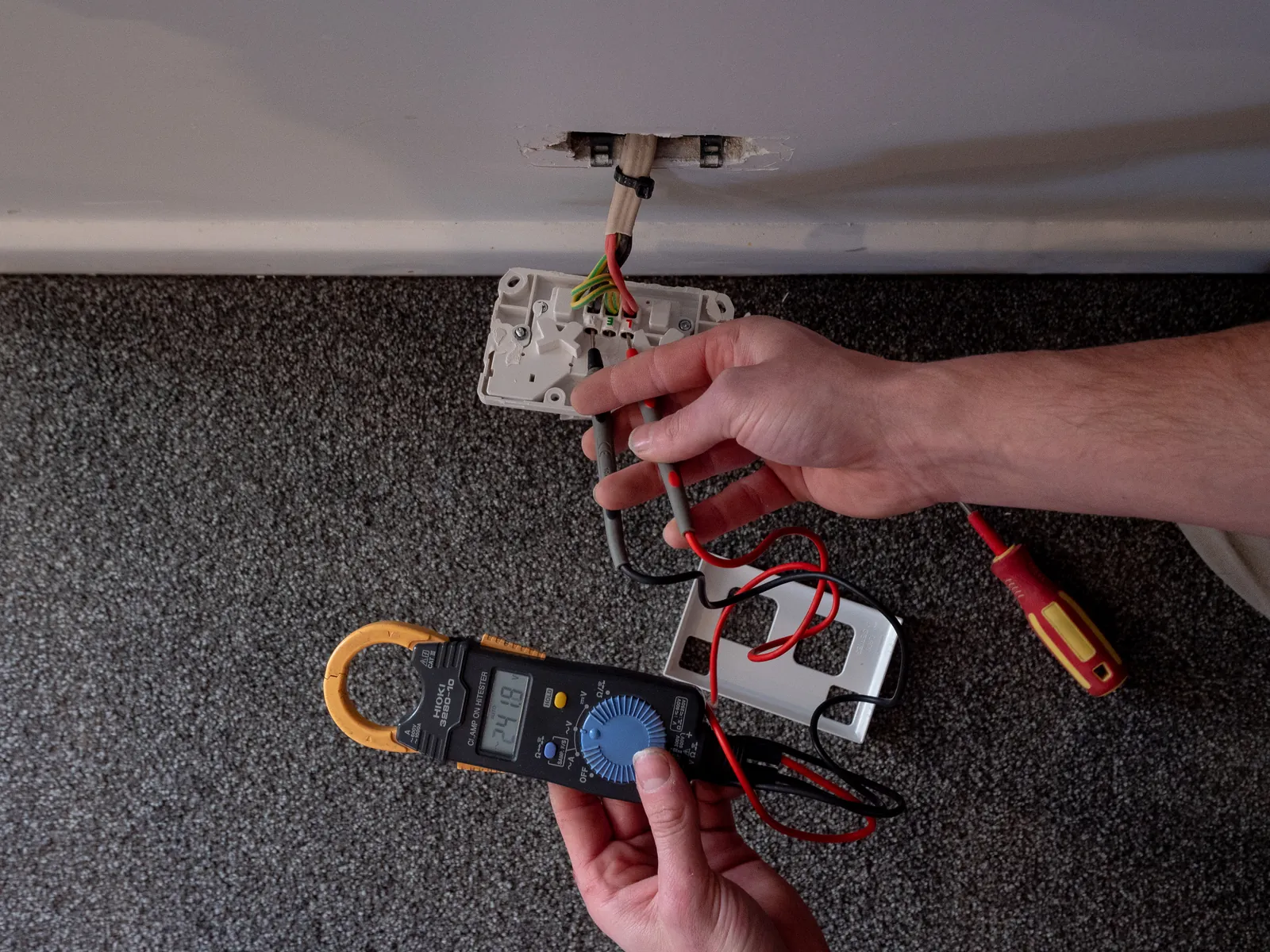
This page is part of eCertify's guide to what changed from AS/NZS 3000:2007 to 2018. It covers Section 3, which the standard calls Selection and installation of wiring systems: external influences, current-carrying capacity, voltage drop, connections, conductor colours, support and mechanical protection, consumer mains, segregation, wiring enclosures, underground wiring and busways.
AS/NZS 3000:2018 marks 34 items in Section 3 as changed. Ten are left off as too slight to change the job (a renamed heading, tidied wording, a pointer to guidance the 2007 edition already had, or a small shift in a terminal check), so this page lists 24 of 34 marked changes. eCertify read every one against the 2007 edition or the amendment itself. The real substance is in protecting cable near building surfaces, cable run through thermal insulation, conductor colours and sleeving on alterations, and keeping separate installations apart, and New Zealand modifies none of them.
eCertify's short version of what Section 3 now asks of you on the job:
Wherever the 2018 edition changed a clause, table or figure significantly from 2007, it prints an asterisk beside it in the margin. Amendments 1 to 3 flag their own edits with a bar and a tag. Either mark tells you that something changed, never what. So eCertify read each marked Section 3 item side by side with the 2007 edition, checked each amendment-only item against the amendment's own instructions, and summed up the difference in a single plain sentence. Smaller edits the standard left unmarked are not listed here, and nor are marked edits that change nothing of substance.
The clause numbers and headings are the standard's. The sentences are eCertify's, so go to the standard itself before you rely on a detail on the job.
New Zealand check: none of the Schedule 2 modifications that the Electricity (Safety) Regulations 2010 make to the Wiring Rules falls in Section 3, and the October 2026 amendment to that schedule changed a Section 2 clause only. Four of the items below carry New Zealand-specific wording in the standard itself, on thermal insulation, conductor colours and the future-insulation rule, and each sentence gives the New Zealand position. Under Schedule 1AA of the same regulations, complying with the 2007 edition stopped counting as compliance at the close of 12 November 2026.
Jordan Statham, eCertify's director, is an EWRB-registered electrical inspector. When an Auckland homeowner wants to know whether old wiring really needs replacing, eCertify's visual check before a rewire reports on the cable types and condition that can be seen, and any testing is quoted before it is booked.
eCertify found four marked changes to how cables are rated and sized.
Clause 3.3.2.13, Thermal insulation. New: the current rating of cable that passes through bulk thermal insulation now depends on how much of its length is buried in it, with the length bands and the rating for each set out in the clause itself, and a New Zealand note points to NZECP 55 near conductive insulation.
Clause 3.4.1, Current-carrying capacity, general. The assumption that domestic wiring will one day sit in ceiling, wall and underfloor insulation, New Zealand only in 2007, now applies in both countries, while Amendment 1 exempts the existing wiring when you extend or alter a circuit and Amendment 3 points the busway note to AS/NZS 61439.6.
Clause 3.4.3, Conductors in parallel. Amendment 2 lifts the 4 mm² minimum off the cores of flexible trailing or reeling cables, such as those in lift installations.
Clause 3.6.2, Voltage drop, value. A new note sends you to AS/NZS 4777.1 for voltage rise on grid-connected inverters, and Amendment 2 words the half-rating shortcut for any final subcircuit with distributed load, where 2007 described load spread over the whole length of the circuit.
eCertify counts seven marked items on conductor colours, two of them new rules for sleeving old conductors during alterations and repairs. Testing the finished wiring is covered on Section 8, verification and testing.
Clause 3.8.1, Identification, general. Green, yellow and green/yellow still may not be used for actives and neutrals, but in New Zealand that now restricts conductor insulation only and not the cable sheath, and Amendment 3 updated the switchboard-wiring note to the AS/NZS 61439 series.
Table 3.4, Conductor colours. A new note makes black the only neutral colour allowed in New Zealand domestic installations, and the recommended multiphase active colours now say blue instead of dark blue.
Clause 3.8.2.2, Sleeving of existing earthing and bonding conductors. New: bare or green earthing and bonding conductors put in under earlier editions may stay, but each new joint or termination on them made during an alteration or repair gets green/yellow sleeving.
Clause 3.8.2.3, Sleeving of existing live conductors. New: yellow-insulated live conductors put in under earlier editions may stay, but each new joint or termination on them made during an alteration or repair gets white sleeving.
Clause 3.8.3.1, Exceptions and special applications, general. The special cases that follow are now excused only from the Table 3.4 colours, where 2007 excused them from all of its general identification and sleeving clauses.
Clause 3.8.3.2, Protective earthing and equipotential conductors. A multi-core cable with a green earth joins the list of cases where the earth need not be green/yellow.
Clause 3.8.3.3, Active and neutral conductors. Identifying cores by number or letter now works in any multi-core cable, not only flexible ones (Amendment 2), and neither that route nor alternative flexible-cord colours may be used on a yellow conductor.
eCertify's side-by-side read found four marked changes in how wiring is supported and protected from damage.
Clause 3.9.3.3.2, Support and protection. Beyond support against sagging, wiring likely to be disturbed must now be held so cables cannot be pulled out of equipment to expose single-insulated cores, protected from mechanical damage under clause 3.3.2.6, and never left to an RCD in place of mechanical protection.
Clause 3.9.4.2, Wiring systems near building surfaces. The 2007 exemption for wiring within 150 mm of internal corners is gone, so concealed wiring within 50 mm of a wall, floor, ceiling or roof surface needs protection wherever it runs, and wiring held in place by thermal insulation is now covered too.
Figure 3.3, Protection in solid or framed walls. Redrawn: the corner zones are gone, and the drawing now shows that cables behind a wall-mounted switchboard may need protection under clause 3.9.4.2.
Clause 3.9.4.4, Protection methods. Mechanical protection must now be at least WSX3 (Appendix H), earthed metal armour, screens or enclosures must be able to operate the short-circuit device under fault, and metal protection over double-insulated cable need not be earthed.
Four marked items deal with consumer mains, keeping installations apart and busways, by eCertify's count. Unprotected consumer mains also come up on Section 2, protection and switchboards.
Clause 3.9.7.1.2, Consumer mains, unprotected. Heavy-duty insulating conduit for unprotected consumer mains may now be to AS/NZS 61386 as well as AS/NZS 2053, and Amendment 3 moved the insulated busway option to the AS/NZS 61439 series.
Clause 3.9.8.2.1, Common enclosure/cable. Conductors of different installations, and now of separate occupancies too, may not share a pipe, tube, conduit or multi-core cable, and Amendment 1 exempts switchboards where the circuits terminate and treats trays with removable covers or none as not being conduit.
Clause 3.9.8.2.2, Segregation. Different installations or occupancies sharing an enclosure must be segregated inside it, segregation by distance now means at least 50 mm, and the switchboard exception covers circuits that end there as well as those that start there.
Clause 3.15, Busways, including rising mains systems. Amendment 3 requires busways to comply with AS/NZS 61439.6, where 2007 named AS/NZS 3439.2.
eCertify found two marked changes for conduit and other wiring enclosures.
Clause 3.10.2.1, Types of wiring enclosure. Conduit to the AS/NZS 61386 series is now accepted alongside AS/NZS 2053, with the new Appendix N comparing the two classification systems (see the appendix changes).
Clause 3.10.3.1, Installation of wiring enclosures, general. New: an enclosure run on roofing must not block the roof's natural drainage or collect debris, so run it across the profile, or up the valley or tray on standoff brackets or blocks.
eCertify's read of three marked underground items: cover is now measured from whichever surface the cable is buried under, slopes included.
Clause 3.11.4.1, Underground installation, general. A new note says the cover measurements apply in any direction where the cover is what protects the cable from digging.
Clause 3.11.4.4, Minimum depth of cover. Where cable runs close to a sloping or vertical surface, the minimum cover now also applies at right angles to that surface, not only vertically.
Figure 3.17, Underground wiring in sloping ground. New drawing showing cover depth and marker tape measured square to a slope.
This page lists 24 of 34 marked changes in Section 3 of AS/NZS 3000:2018. Comparing them with 2007, eCertify finds the weight in four areas: concealed cable near building surfaces needs protection right into the corners, cable through bulk insulation is rated by how much of its length is buried, old conductors get sleeved at new joints during alterations and repairs, and separate installations and occupancies are kept apart in conduit and enclosures. Two are amendment edits only, six more carry amendment edits as well, and New Zealand modifies none of them.

787 Riddell Road, St Heliers, Auckland 1071
09 302 0884office@ecertify.co.nzFind us on Google MapsGet in touch any time. On-site work runs Monday to Friday, 7am to 5pm.
Our team are fully accredited and qualified electrical professionals.

Copyright © eCertify. All rights reserved.