
eCertify lists 42 of 46 marked changes in Section 1 of AS/NZS 3000:2018, scope and definitions, since 2007, each in one plain sentence.
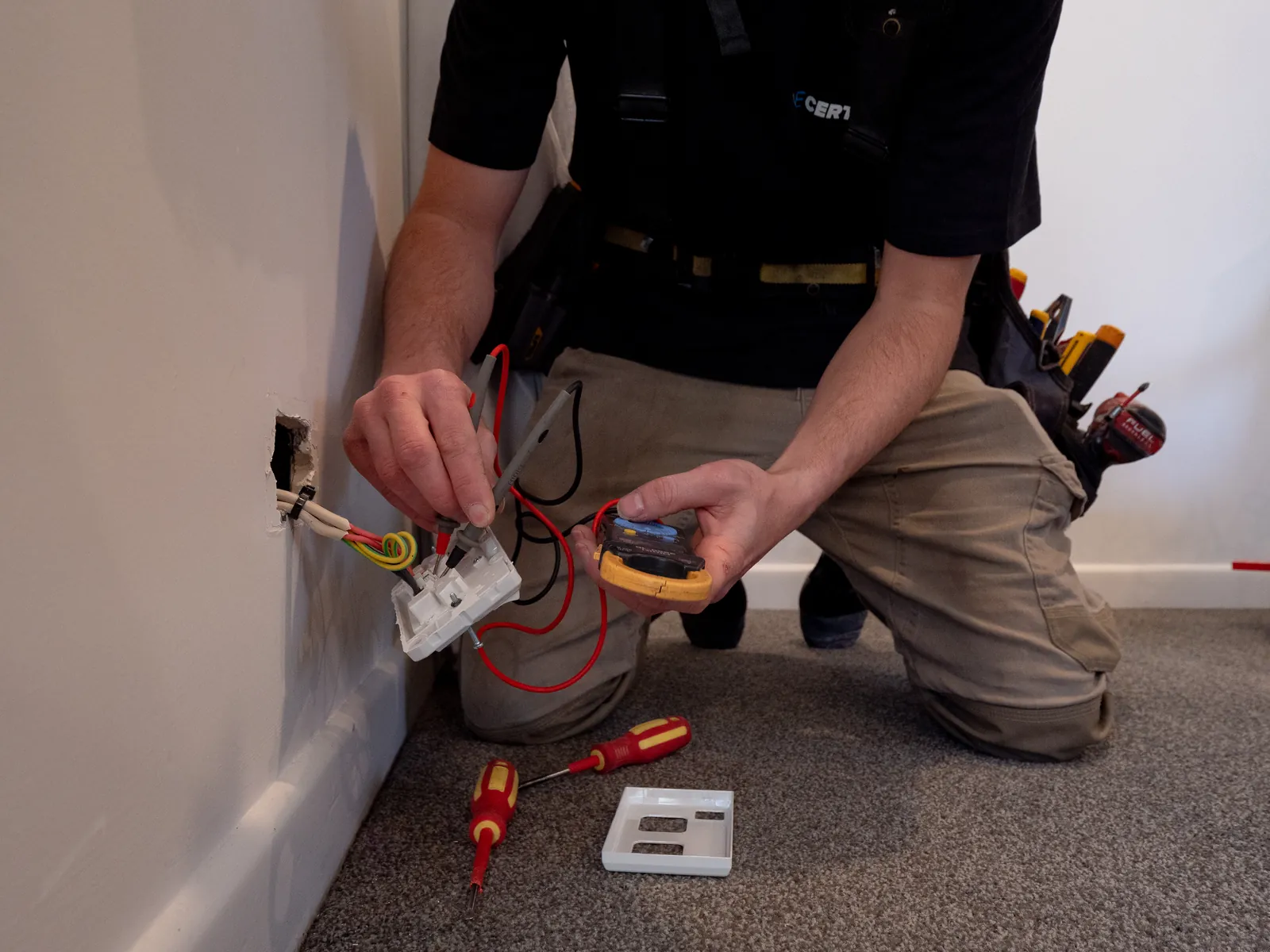
This page is part of eCertify's guide to what changed from AS/NZS 3000:2007 to 2018. It covers Section 1, which the standard calls Scope, application and fundamental principles: what the standard covers, its definitions, the core protection principles, design, work practice, verification, and the ways to comply, alterations, repairs and Part 1 designs included.
AS/NZS 3000:2018 marks 46 items in Section 1 as changed, 34 of them definitions. Four are left off as too slight to change the job (a duty moved to another clause, two new notes that only point to guidance, and one example dropped from a definition), so this page lists 42 of 46 marked changes. eCertify read every one against the 2007 edition or the amendment itself. The real substance is in the new definitions, the green/yellow colour rules, repairs and Part 1 designs, and New Zealand modifies none of them.
eCertify's short version of what Section 1 now asks of you on the job:
Wherever the 2018 edition changed a clause, table or figure significantly from 2007, it prints an asterisk beside it in the margin, and in clause 1.4 that mark flags each new or revised definition. Amendments 1 to 3 flag their own edits with a bar and a tag. Either mark tells you that something changed, never what. So eCertify read each marked Section 1 item side by side with the 2007 edition, checked each amendment-only item against the amendment's own instructions, and summed up the difference in a single plain sentence. Smaller edits the standard left unmarked are not listed here, and nor are marked edits that change nothing of substance.
The clause numbers and headings are the standard's. The sentences are eCertify's, so go to the standard itself before you rely on a detail on the job.
New Zealand check: the Electricity (Safety) Regulations 2010 modify the Wiring Rules for New Zealand in their Schedule 2, and two of those modifications land in Section 1, both on clauses that are not marked. Clause 1.5.6.3 gains a rule that every RCD must suit the loads it serves, with DC fault currents and waveform distortion considered, and clause 1.6.2(c) loses note (b), its New Zealand voltage tolerance note. Neither touches the 42 items below, and the October 2026 amendment to that schedule changed a Section 2 clause only. Where an item carries New Zealand-only wording, its sentence gives the New Zealand position. Under Schedule 1AA of the same regulations, complying with the 2007 edition stopped counting as compliance at the close of 12 November 2026.
Jordan Statham, eCertify's director, is an EWRB-registered electrical inspector. A certificate of verification on an existing Auckland installation is where eCertify puts Section 1's inspect-and-test principle to work on a home as it stands: the inspection runs from the point of supply inwards, with testing alongside it, under AS/NZS 3019, the standard for assessing existing installations.
eCertify found one marked change of substance in the scope, and it adds planning for loss of supply to the standard's aims.
Clause 1.1, Scope. The guidance side of the scope now also covers allowing for the foreseeable effects of a supply disruption, which the 2007 scope did not mention.
AS/NZS 3000:2018 asterisks every new or revised definition in clause 1.4, and eCertify groups the 33 it lists by topic, starting with four on access, people and drafting terms.
Clause 1.4.2, Accessible. New: something you can get to for inspection, maintenance or repair without breaking into the building's structure, where 2007 defined only readily accessible.
Clause 1.4.6, Adjacent. New: next to or joining something, with nothing in the way, and within arm's reach.
Clause 1.4.18, Authorized person. Besides the person in charge of the premises, it now means a competent person they appoint, where 2007 named a licensed electrical contractor or electrician.
Clause 1.4.86, Normative. New: the word for any part of a standard you have to meet before you can claim compliance with it.
eCertify counts seven marked definitions about the state of a circuit, several of them borrowed from AS/NZS 4836 and ENA-014, which the standard names as their source.
Clause 1.4.45, De-energized. New: cut off from every source of supply, though not necessarily isolated, earthed or taken out of service.
Clause 1.4.51, Electrical fault. New: a failure, defect or flaw in a circuit or equipment that causes an unintended change in current or voltage, an overvoltage, overcurrent or arcing fault current.
Clause 1.4.59, Energized. New: connected to a source of supply.
Clause 1.4.74, Isolated. New: cut off from every possible source and made so it cannot be livened by accident, a step beyond de-energized.
Clause 1.4.78, Live. New: energized, or carrying a hazardous induced or capacitive voltage.
Clause 1.4.79, Live part. Amendment 1 turned the list of MEN parts that do not count as live parts from a note into formal exceptions, and the list now has a sixth entry that 2007 lacked: the neutral of a submain or final subcircuit whose active supply is isolated.
Clause 1.4.82, Main switch. New: a switch whose main job is isolating the supply to the installation, and which may also meet a regulatory requirement if it is labelled for that.
Three marked definitions touch earthing arrangements, by eCertify's count. The earthing rules themselves are on Section 5, earthing and bonding.
Clause 1.4.83, Multiple earthed neutral (MEN) system. The earthed parts now connect to earth and, inside the installation, to the supply neutral or a PEN conductor, and the definition adds that protective earth and neutral stay separate within the installation, where 2007 described one bonded network tied to both neutral and earth.
Clause 1.4.85, Neutral earthed system. New: a system whose protective earth and neutral, once joined at the transformer or generator, are not joined again anywhere on the way to the installation.
Clause 1.4.99, Protective earth neutral (PEN). New: a single conductor doing the work of both neutral and protective earth.
eCertify's read of eight marked definitions for protective devices, socket-outlets and the wiring itself.
Clause 1.4.14, Arc fault detection device (AFDD). New: a device that limits the damage from arcing faults in installation wiring and plugged-in equipment by disconnecting the circuit when it detects an arc; there is more in eCertify's post on AFDDs and PEN switching.
Clause 1.4.67, Functional unit. New, from the AS/NZS 61439 series: the parts of a switchboard assembly that together do one job, leaving out conductors connected to it from outside its compartment.
Clause 1.4.76, Lamp. New: the bulb, tube or similar item that actually gives out the light.
Clause 1.4.111, Socket-outlet (multiple combination). New: a single socket-outlet with two or more sets of contacts, so it takes two or more plugs.
Clause 1.4.112, Socket residual current device (SRCD). New: a fixed socket-outlet with its own RCD, built in or mounted alongside, with or without overcurrent protection, that may also protect outlets downstream; the RCD rules are on Section 2, protection and switchboards.
Clause 1.4.113, Soft wiring. New: a wiring system built from installation couplers, making up all or part of a subcircuit.
Clause 1.4.126, Track system. Amendment 3 points the busway exclusion at busways to AS/NZS 61439.6, where 2007 named AS/NZS 3439.2.
Clause 1.4.133, Wiring systems. New: the conductors, cables or busbars together with whatever fixes them in place and, where needed, protects them.
eCertify found nine marked definitions on supplies, kinds of building and safety services.
Clause 1.4.55, Electrical installation, residential. New, alongside the domestic definition 2007 already had: an installation or part of one that serves one or more living units, with hotels, motels, boarding houses and hospitals among the examples, and it is the term Section 2's New Zealand RCD clause for residential installations uses.
Clause 1.4.56, Electric vehicle (EV). New: a road vehicle driven by an electric motor drawing on a rechargeable battery, plug-in hybrids included; charging rules are on Section 7, solar, EV and special installations.
Clause 1.4.65, Fire mode. New: the mode building systems switch into when the building's fire alarm activates.
Clause 1.4.77, Lift. New: a platform or car running in roughly vertical guides that raises and lowers people, which leaves out hoists, dumb waiters, escalators and travelators.
Clause 1.4.89, Outbuilding (combined). New: structures on one foundation, or sharing conductive metal roofing or framing, with more than one supply, standing apart from the building whose switchboard feeds them.
Clause 1.4.104, Safety service. The definition now names the safety services itself, from fire detection and smoke control to evacuation systems and emergency lifts, where 2007 pointed to clause 7.2 for examples, and a note refers New Zealand readers to essential services under the Building Code.
Clause 1.4.118, Supply, alternative. New: a supply that keeps all or part of the installation working when the normal supply is interrupted.
Clause 1.4.119, Supply, normal. New: the supply the installation runs on in normal operation, usually the network but possibly a generation system.
Clause 1.4.120, Supply, supplementary. New: a supply that runs together with the normal supply.
eCertify read three marked items in the shock-protection principles, two of them amendment edits only.
Clause 1.5.3.1, Protection against electric shock, general. Amendment 2 rewrote the core rule so live parts must not be reachable without a tool or key, in normal service or under a single fault, where 2007 said they must not be accessible and made no mention of a tool or key.
Clause 1.5.4.4, Protection by barriers or enclosures. A new rule says the IP rating of a barrier or enclosure has to suit the surrounding conditions and the mounting position the manufacturer specifies.
Clause 1.5.5.4, Protection by the use of Class II equipment or by equivalent insulation. Amendment 3 ties the totally insulated switchgear option to AS/NZS 61439.1, where 2007 named AS/NZS 3439.1.
One marked item changes site practice, on eCertify's reading.
Clause 1.7.2, Installation work practice. Four additions: condensation joins the influences to protect against, green and green/yellow are kept for earthing and bonding conductors with no limit on sheath colour in New Zealand (2007 barred those colours on live conductors' sheaths too), a breather or pressure-equalisation valve deals with condensation, and equipment goes in so it keeps its marked IP rating.
eCertify found six marked items on work to existing installations and the routes to compliance, two of them new definitions.
Clause 1.4.8, Alteration. New: a change to part of an installation, with a note that a repair is not an alteration.
Clause 1.4.101, Repair. New: work that restores an installation to a safe, sound working condition after it has deteriorated or been damaged.
Clause 1.9.2, Compliance with the requirements of other standards. The Australia-only route by which homes meeting AS/NZS 3018 were deemed compliant is gone, and the clause now only points to clause 7.8 and Appendix A for other standards.
Clause 1.9.3.1, Alterations. Alterations get a clause of their own requiring them to meet every relevant provision, no longer framed as a deemed new installation, and a note sends you to Appendix I where existing imperial cables are involved.
Clause 1.9.3.2, Repairs. A repair may now use methods, fixtures and fittings that were acceptable when that part was installed or those available today as direct replacements, provided the Part 1 safety principles are still met.
Clause 1.9.4.6, Identification. New: where a Part 1 solution is adopted, the main switchboard and any other switchboard tied to that solution must carry a clear, permanent warning saying so.
This page lists 42 of 46 marked changes in Section 1 of AS/NZS 3000:2018, 33 of them definitions. Comparing them with 2007, eCertify finds the weight in four places: alteration and repair are now defined and repairs may use today's direct replacements, green and green/yellow are kept for earthing and bonding with a New Zealand allowance on sheath colour, live parts must not be reachable without a tool or key, and new definitions such as AFDD, PEN, SRCD and residential installation underpin rules later in the standard. Four are amendment edits only, and New Zealand modifies none of them.

787 Riddell Road, St Heliers, Auckland 1071
09 302 0884office@ecertify.co.nzFind us on Google MapsGet in touch any time. On-site work runs Monday to Friday, 7am to 5pm.
Our team are fully accredited and qualified electrical professionals.

Copyright © eCertify. All rights reserved.