
eCertify lists 36 of 44 marked changes in Section 4 of AS/NZS 3000:2018, electrical equipment, since 2007, each in one plain sentence.
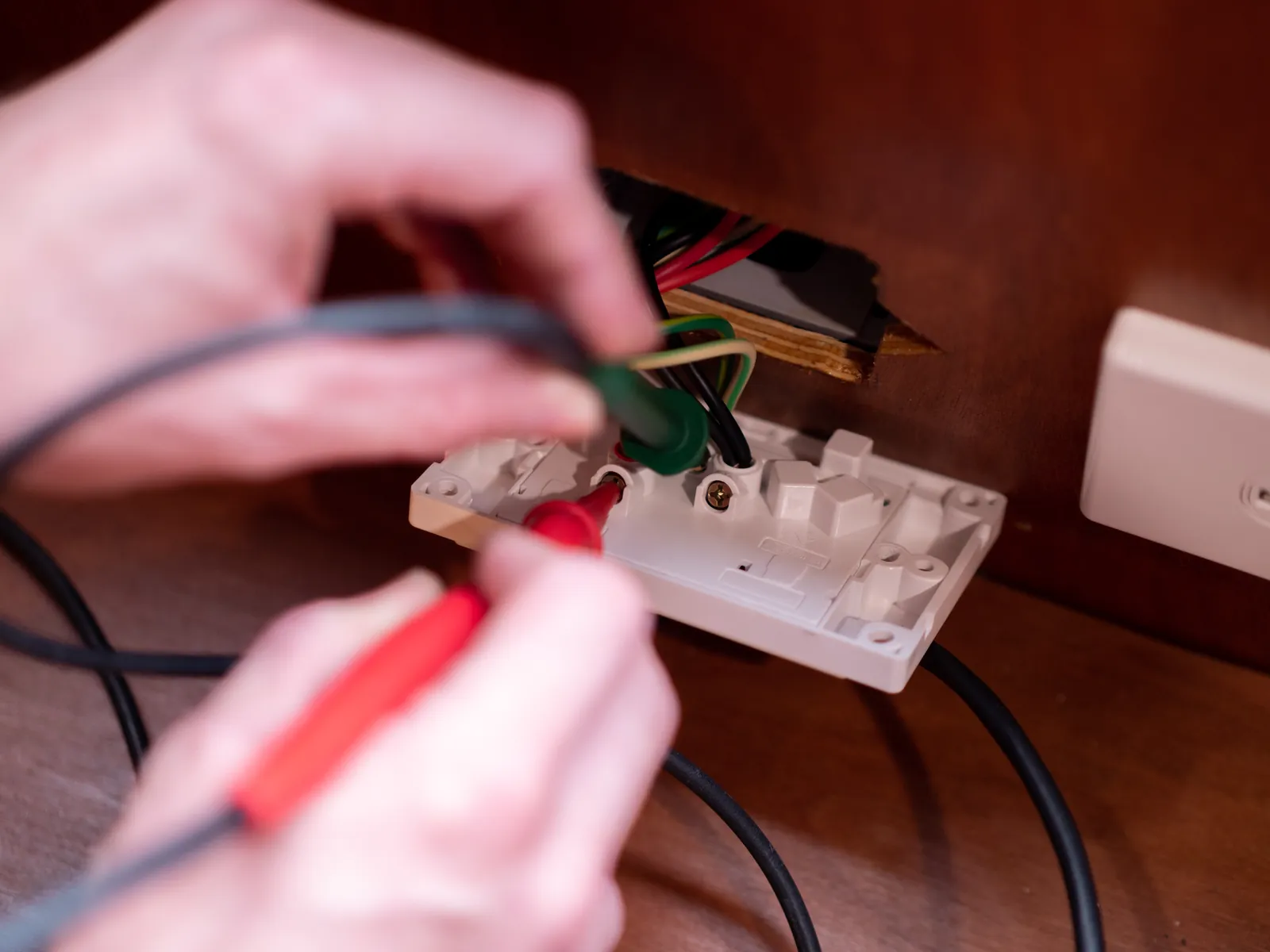
This page is part of eCertify's guide to what changed from AS/NZS 3000:2007 to 2018. It covers Section 4, which the standard calls Selection and installation of electrical equipment: accessories outdoors, connecting equipment, socket-outlets, lighting and recessed luminaires, smoke alarms, cooking and hot water appliances, converters and motors, gas appliances, heat pumps and lifts.
AS/NZS 3000:2018 marks 44 items in Section 4 as changed. Eight of them are editorial, or read just as 2007 did once the amendments are applied, so this page lists 36 of 44 marked changes. eCertify read every one against the 2007 edition or the amendment itself. The real substance is in recessed downlights, the isolators for water heaters, heat pumps and gas appliances, the zone around a cooktop, and outdoor IP ratings. New Zealand law modifies one of the 36, clause 4.18.2.3, and its entry below says what applies here.
eCertify's quick list of what Section 4 now means on site:
The 2018 edition puts an asterisk in the margin beside any clause, table or figure it changed significantly from 2007, and each of Amendments 1 to 3 puts a tagged bar beside its own edits. Neither mark says what the change was. So eCertify set every marked Section 4 item beside its 2007 counterpart, checked each amendment-only item against that amendment's edit instructions, and wrote one plain sentence on the difference. Edits the standard left unmarked are not covered, and marked items whose change is only editorial are counted but not listed.
The clause numbers and headings belong to the standard. The sentences are eCertify's own summary, so check the standard itself before you rely on a detail on site.
New Zealand check: Schedule 2 of the Electricity (Safety) Regulations 2010 modifies two Section 4 clauses for New Zealand. One is clause 4.18.2.3, listed below, where New Zealand law reads exclusion zone in place of the standard's hazardous area. The other is clause 4.18.5, on reticulated gas regulators, which the standard did not mark as changed and so is not listed; New Zealand law makes the same swap there and drops lighter-than-air from its heading. The October 2026 amendment to that schedule changed a Section 2 clause only. One listed item, clause 4.18.1.2, applies in Australia only. Under Schedule 1AA of the same regulations, complying with the 2007 edition stopped counting as compliance at the close of 12 November 2026.
Jordan Statham, eCertify's director, is an EWRB-registered electrical inspector. For homeowners, the eCertify team's visual electrical safety check for Auckland homes looks over many of the fittings this section governs, including socket-outlets and switches, light fittings, hot water and smoke alarms, and reports on them in writing without testing.
eCertify found five changes of substance in the general rules, three of them about equipment fitted outside.
Clause 4.1.2, Selection and installation. Equipment must now also be installed to the manufacturer's instructions as well as to this section, new notes point to the cooktop clearance rule, to Section 6 for wet areas and, in New Zealand, to NZECP 55 for wiring near conductive thermal insulation, and Amendment 2 renamed one scope item as smoke alarms and fire detectors.
Clause 4.1.3, External influences. An accessory with no IP marking now counts as protected from the weather only inside the space under an eave or verandah bounded by a 30 degree line from the soffit's outer edge back to the wall, anything fitted outside that space needs at least IP33 (IP23 for meter enclosures and overhead line connector boxes to AS 3124), and a new note warns that drilling a drain hole destroys an enclosure's IP rating.
Figure 4.1, Overhang IP33 zone, side view. New: a side view of an eave or verandah showing where unmarked accessories may go and where IP33 starts.
Figure 4.2, Overhang IP33 zone, front view. New: the same protected and unprotected areas seen from the front.
Clause 4.1.5, Air extraction systems. Added by Amendment 1: because an extract system can upset flued combustion appliances, even in other rooms, and risk carbon monoxide poisoning, you now advise the customer to have those appliances tested by a competent person.
In the clauses on connecting equipment, eCertify counted five marked changes, three of them a new clause on installation couplers.
Clause 4.3.1, General. Amendment 2 added a rule that accessories to AS/NZS 3105, AS/NZS 3122 or AS/NZS 3199 may not be used to join equipment wiring to installation wiring anywhere that is not readily accessible.
Clause 4.3.3, Installation wiring connected by an installation coupler(s). A new clause for installation wiring run through installation couplers, which 2007 covered only in its general coupler clause, so 2007's clauses from socket-outlets onwards each move up one number.
Clause 4.3.3.1, General. Cords and cables joined by installation couplers must be heavy-duty sheathed (AS/NZS 3191 or AS/NZS 5000), sized to the protective device unless they end at a single item such as a luminaire, protected from damage, supported, and kept as short as practicable.
Clause 4.3.3.2, Socket-outlets. A socket-outlet fed through an installation coupler must suit its use, be fixed in place, be built or arranged so dust and water cannot collect when it sits on a horizontal surface, and be firmly fixed to a structure where it is not readily accessible.
Clause 4.3.6, Equipment wiring. A new item requires installation wiring that connects inside a luminaire, or passes through one, to be chosen and run so heat or UV from the luminaire and its lamps cannot damage it or its connections.
eCertify's comparison found three new socket-outlet clauses with a practical effect. The RCD rules for socket-outlet circuits are in Section 2, protection and switchboards, and eCertify's guide to RCD types and testing covers the devices themselves.
Clause 4.4.1.1.2, Socket-outlets, alternative pin configurations. Overseas-pattern socket-outlets, such as UK, French, German or US types, are now allowed only as single-standard outlets with an earth contact, never multi-standard ones, and in New Zealand only at international airports or in accommodation for overseas guests, with a 10 mA RCD and an AFDD on the 230 V types and reduced low voltage for the 110 V types.
Clause 4.4.1.1.3, Low voltage fixed socket-outlet. A low voltage switch or socket-outlet, or its faceplate, now may not include a connector for data, telecommunications, television or radio wiring, though USB charging outlets on the faceplate are fine.
Clause 4.4.1.3, Socket-outlets for electric vehicle charging. New: in New Zealand, where and how EV charging socket-outlets are installed is set by Clause 7.9 (see Section 7, solar, EV and special installations), with Appendix P as guidance.
Three marked items on lampholders and recessed luminaire clearances change what you do, by eCertify's reading.
Clause 4.5.1, Lampholders, including lampholders incorporated in a luminaire. Being built into a luminaire no longer appears as a way for a lampholder to meet the location rule, which leaves the 1.8 m height or a guard, and keeping pendant lampholders out of strong air movement is now a requirement rather than a note.
Figure 4.9, Default recessed luminaire clearances. Replaced by Amendment 1: the default clearances, drawn for three luminaire classes, are 100 mm to building elements above and beside, 100 mm to insulation and 50 mm to control gear, a set 2007 used only in its New Zealand-only figure while its general figure asked for 200 mm above and beside.
Clause 4.5.2.3.2, Warning sign. The roof-space warning sign may now be left out where every recessed luminaire in that space is IC or IC-4, and it goes beside the access point rather than the access panel.
eCertify found the biggest rewrite in Section 4 in four items on recessed luminaire classes and how they go in. Read together, clauses 4.5.2.3.3 to 4.5.2.3.5 mean a downlight with no classification marking cannot be installed in a New Zealand home: New Zealand treats an unmarked fitting as do-not-cover, and do-not-cover luminaires may not go into New Zealand residential installations.
Clause 4.5.2.3.3, Installation. 2007's installation precautions, mostly worded as advice, become a list of requirements, so keeping combustible material off a luminaire's hot surfaces is now mandatory, the detachable-barrier and over-100 W rules that 2007 kept for New Zealand now sit in the general list, and since Amendment 1 the rule treating unmarked fittings as do-not-cover is stated for New Zealand only.
Clause 4.5.2.3.4, Classifications of recessed luminaires. The classes now follow Appendix ZZ of AS/NZS 60598.2.2:2016 (Non-IC, do-not-cover, CA90, CA135 for New Zealand only, IC and IC-4, each with its own symbol), where 2007 named IC-F, IC, CA80 and CA135.
Clause 4.5.2.3.5, Requirements for specific classifications. In New Zealand residential installations only CA90, CA135, IC or IC-4 luminaires may be fitted, with Non-IC and do-not-cover allowed in non-residential work, and Amendment 1 made both lists exclusive and let luminaires labelled under the old New Zealand Amendment A classes be treated as the new ones, CA80 as CA90 and IC-F as IC-4.
Table 4.3, Recessed luminaire class guide. New: a guide setting out, class by class, whether a luminaire may be abutted or covered, its use with insulation and its temperature limits, and it warns against fitting any luminaire with no class marking or clearance instructions.
eCertify counted six marked items here, and the cooktop and water heater ones change where switches go.
Clause 4.6, Smoke alarms. The clause now covers smoke alarms only, no longer fire detectors, and notes that building codes and legislation also set rules on interconnection, while mains alarms may still go on the lighting circuit or a circuit of their own.
Clause 4.7.1, Switching device. The cooktop switch is no longer allowed on the appliance itself, where the user must reach across the cooking surface, or in the Clause 4.7.3 zone, and in New Zealand a combined gas and electric cooktop's switch now has to break only the active conductors, where 2007 asked for active and neutral.
Clause 4.7.3, Clearance from open cooking surfaces. New: no socket-outlet or switch within 150 mm of the edge of a gas or electric cooktop, from the cooking surface up to the rangehood, cupboard or ceiling above, or to 2.5 m above the floor if that is lower.
Figure 4.17, Cooktop no-go zone. New: shows the 150 mm prohibited zone beside a cooktop and how high it runs.
Clause 4.8.1, General. Amendment 1 added a note that the hot water and steam rules apply to such appliances whatever their main energy source, so a gas califont with electric ignition counts as a water heater.
Clause 4.8.2.3, Isolating switch. A direct-connected water heater now needs one lockable isolating switch beside the heater but not on it, which also isolates every final subcircuit supplying it, where 2007 allowed switches on the heater or at the switchboard, and Amendment 1 changed the trigger from fixed wired to direct connected.
Three marked items in this part of Section 4 change the job, by eCertify's reading.
Clause 4.10.2, Heating cables. In New Zealand, in-floor and ceiling heating cables must now be installed to NZS 6110, which 2007 mentioned only in a note.
Clause 4.12.4.1, Isolation of electricity converters, general. A converter's isolating switch must now have a means of securing it in the isolated position that takes a deliberate action to engage or release.
Clause 4.13.1.1, Switching devices. Amendment 1 lets a motor's starting and stopping, emergency stopping and isolation for maintenance be shared across more than one switching device, provided together they do all three.
eCertify's read of the five gas items: new zones around relief vents and indoor cylinders, a New Zealand rule for cylinders outside homes, and an isolation clause that applies in Australia only.
Clause 4.18.1.2, In Australia only. Applies in Australia only, not New Zealand: there a gas appliance's isolating switch still breaks active and neutral, whereas New Zealand's own clause 4.18.1.3, which the standard did not mark, asks for the active conductors only, where 2007 asked for both in each country.
Clause 4.18.2.3, Electrical equipment and gas supply, NZ only. In New Zealand domestic installations, only equipment directly associated with the gas supply may sit inside the zone around an outdoor gas cylinder shown in Figure 4.18, and New Zealand law calls that zone an exclusion zone, not a hazardous area as the printed standard does.
Clause 4.18.3, Gas cylinders, indoors, New Zealand only. New: an indoor compartment for a gas cylinder may hold no ignition source, such as a socket-outlet, switch, dishwasher or waste disposal unit, and 2007's 4.18.3 on reticulated gas becomes 4.18.5.
Clause 4.18.4, Gas relief vent terminal, natural gas, LP gas or biogas. New: no ignition source within the zone around a gas relief vent terminal drawn in Figure 4.19, with equipment suited to Zone 2 under AS/NZS 60079.14 not counted as an ignition source.
Figure 4.19, Gas relief vent exclusion zone. New with its clause and sized by vent diameter, and Amendment 2 rewrote its second note to describe the zone's shape: a cylinder in the direction of discharge and a hemisphere behind the discharge point.
eCertify's last two Section 4 items cover heat pump isolation and a new clause on lifts.
Clause 4.19, Airconditioning and heat pump systems. The lockable isolator must now sit beside the unit but not on it, and where indoor units run on a separate circuit the compressor isolator carries a warning sign and each hard-wired indoor unit gets its own lockable isolator, with window and through-wall units and plug-in heat pump water heaters exempt.
Clause 4.20, Lifts. New: lifts go on a dedicated, clearly identified circuit, a motor-room-less lift's switchboard may not sit in the lift shaft, and lifts serving as emergency lifts must also meet the safety services rules in Clause 7.2.
This page lists 36 of 44 marked changes in Section 4 of AS/NZS 3000:2018. Set against 2007, eCertify finds the weight in five places: recessed downlights use a new set of classes and default clearances, isolators for water heaters, heat pumps and gas appliances have moved or changed, socket-outlets and switches stay 150 mm clear of a cooktop, outdoor accessories need IP33 beyond the eave line, and gas cylinders and relief vents get zones of their own. Seven are amendment-only edits, one applies in Australia only, and New Zealand law modifies one, clause 4.18.2.3.

787 Riddell Road, St Heliers, Auckland 1071
09 302 0884office@ecertify.co.nzFind us on Google MapsGet in touch any time. On-site work runs Monday to Friday, 7am to 5pm.
Our team are fully accredited and qualified electrical professionals.

Copyright © eCertify. All rights reserved.