
Since AS/NZS 3000:2018 was cited in New Zealand from 13 November 2025, confirming an RCD works requires an instrument function test covering trip time, correct operation and shock protection for AC and pulsating DC, not the integral test button alone. The acceptable RCD types are now Type A, Type F or Type B, and a Type B RCD is required on the dedicated circuit for a Mode 3 or 4 EV charger.
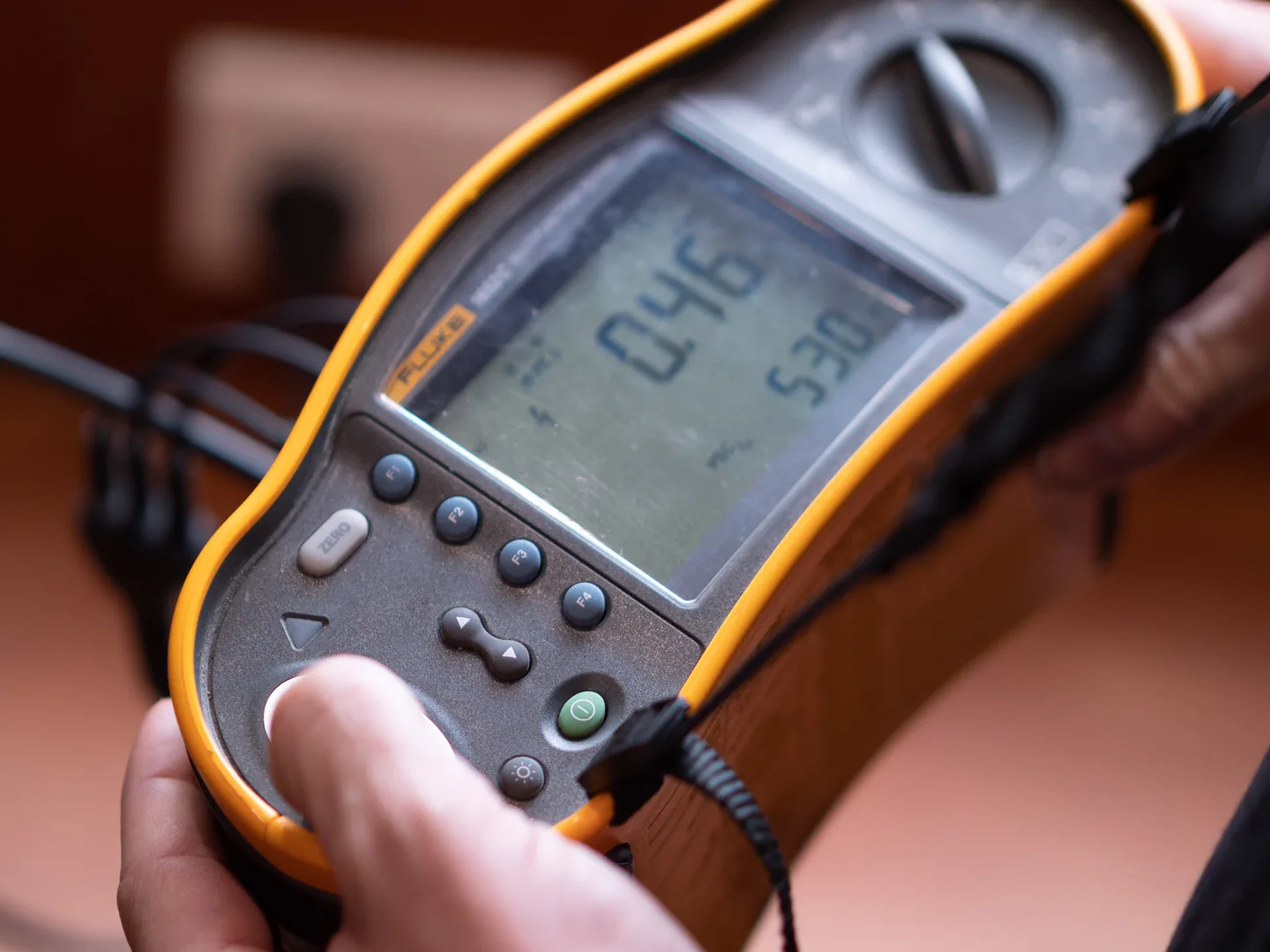
Part of eCertify's wider post on the AS/NZS 3000:2007-to-2018 transition, this one covers the single change catching the most electricians out on site: the test button is no longer enough.
Direct answer: Since AS/NZS 3000:2018 was cited in New Zealand from 13 November 2025, confirming an RCD works requires an instrument function test covering trip time, correct operation and shock protection for AC and pulsating DC, not the integral test button alone. The acceptable RCD types are now Type A, Type F or Type B, and a Type B RCD is required on the dedicated circuit for a Mode 3 or 4 EV charger.
Under the 2007 wiring rules as cited in New Zealand, pressing an RCD's own test button was an acceptable way to confirm it worked, as long as the RCD was marked Type A. New Zealand modifications 9 to 11 to clause 8.3.10 of AS/NZS 3000 remove that option. The function test on an RCD must now cover:
In practice, that means a test instrument capable of measuring trip time and checking both AC and pulsating DC residual current, not a finger on the button.
An RCD's test button confirms the mechanism can trip. It does not confirm the RCD responds correctly to the type of residual current a real fault produces, particularly where EV chargers, solar inverters, heat pumps and variable-speed drives are putting pulsating or smooth DC components onto a circuit. The New Zealand modification closes that gap by requiring the instrument test to check the RCD against the fault currents it is actually marked to handle.
New Zealand modification 4 to clause 2.6.2.2.3(b) of AS/NZS 3000 sets the acceptable RCD types as: Type A (to IEC 61008-1 or IEC 61009-1), or Type F or Type B (both to IEC 62423). In plain terms:
Type AC RCDs, which only detect residual AC, are not an acceptable general-purpose type in New Zealand under either edition.
An RCBO combines an RCD and an overcurrent circuit breaker in one device. Everything above about RCD type and testing applies equally to an RCBO's RCD function; it is still an RCD for the purposes of the type and test requirements, just packaged with overcurrent protection.
Clause 7.9.3.3 of AS/NZS 3000, a New Zealand-only clause covering Mode 3 and 4 EV charging, requires the dedicated final subcircuit to be protected by a separate RCD of Type B, rated at a maximum of 30 mA residual current, operating on all live conductors. The one exception: a Mode 3 charging facility may instead use a Type A RCD together with a residual direct-current-detecting device to IEC 62955, which disconnects supply if it detects 6 mA or more of residual DC. Either way, a plain Type A RCD with no DC-detecting device on an EV charging circuit does not meet the clause.
This is a circuit-specific rule. It does not change what RCD type is acceptable elsewhere in the installation; it sets the minimum for the EV charging circuit itself.
RCD testing and RCD types are two of the New Zealand modifications that came in when the cited edition moved to AS/NZS 3000:2018 on 13 November 2025. The same transition rules that apply to the rest of the standard apply here: work that complied with the pre-13-November-2025 requirements can continue to be used, maintained, tested and certified under those requirements if it is not unsafe, and 2007 remains an acceptable basis for work started before the close of 12 November 2026. The full detail on the transition and the deadline is in eCertify's main post on the AS/NZS 3000 2007-to-2018 change.
An RCD instrument test, done properly, is exactly the kind of thing a Mains Work ROI inspection checks on a high-risk job, and it is the same test eCertify runs during an ordinary electrical safety check or a switchboard upgrade. eCertify's Mains Work ROI service (NZ$349.90 including GST) covers that inspection and the Record of Inspection it produces; more on what counts as high-risk and what an inspection looks for is in eCertify's write-up of high-risk electrical work and mains inspections.
Since 13 November 2025, confirming an RCD works in New Zealand means an instrument test covering trip time and both AC and pulsating DC residual current, not the test button on its own, under New Zealand modifications 9 to 11 of AS/NZS 3000 clause 8.3.10. Acceptable RCD types are now Type A, F or B, and a Mode 3 or 4 EV charging circuit needs a Type B RCD (or Type A with a DC-detecting device) under clause 7.9.3.3. eCertify, Auckland's electrical compliance specialist, checks exactly this during a Mains Work ROI inspection, because an RCD that passes a button test can still fail the instrument test the standard now requires.
No. The instrument test has to match what the RCD is marked to handle. A Type A RCD needs AC and pulsating DC testing; a Type B RCD on an EV charging circuit needs testing that covers its wider DC-detection range.
No. An AFDD (arc fault detection device) detects arcing faults, such as damaged cable insulation; an RCBO combines an RCD (residual current protection) with overcurrent protection. They protect against different fault types and are not interchangeable.
No. Type A remains an acceptable general RCD type under AS/NZS 3000:2018 as cited in New Zealand. It is the minimum now permitted alongside Type F and Type B; it has not been banned.
A Type AC RCD only detects residual AC current, not the pulsating DC a real fault can produce. New Zealand's RCD type rule has required at least Type A protection since the 2007 edition, and that carries through to 2018.
Yes, for general circuits. An EV charging circuit under clause 7.9.3.3 is the exception: it needs Type B, or Type A combined with a DC-detecting device to IEC 62955.

787 Riddell Road, St Heliers, Auckland 1071
09 302 0884office@ecertify.co.nzFind us on Google MapsGet in touch any time. On-site work runs Monday to Friday, 7am to 5pm.
Our team are fully accredited and qualified electrical professionals.

Copyright © eCertify. All rights reserved.