
Need an electrical safety certificate in Auckland? eCertify, an Auckland electrical certification and inspection company, works anywhere in the Auckland region from its base in St Heliers. An electrical safety certificate (ESC) states that an installation is connected to the power supply and safe to use after electrical work. Regulation 74A gives the job of issuing it to the person who completed the work.
eCertify issues ESCs for the work eCertify carries out and connects. When an insurer, bank or council asks for an "electrical safety certificate" on an existing house where no new work has been done, eCertify inspects and tests the installation and issues a certificate of verification (CoV).
eCertify's fixed prices, including GST, are NZ$269.90 for the insurance package and NZ$259.90 for the building consent package, each with a CoV on the day if the installation is safe. If nobody knows what state the wiring is in, eCertify's electrical safety check is NZ$249.90 including GST, with a written report. Callout and mileage anywhere in Auckland are included.
Last reviewed by Jordan Statham, registered electrical inspector (EW129010), 11 October 2026
eCertify issues electrical safety certificates in Auckland for electrical work eCertify carries out and connects, such as a repair made during an inspection. For an existing house where nobody has done new work, eCertify inspects and tests the installation and issues a CoV instead. eCertify comes to the property anywhere in the Auckland region, with the callout inside the fixed price.
If the ESC is for work another electrician has just finished, that electrician issues it, and eCertify cannot issue it in their place.
Certification is eCertify's whole business. eCertify is a team of registered, fully qualified electricians and inspectors, rated 5.0 on Google, and its director, Jordan Statham, has been an EWRB-registered electrical inspector since 2017.
The person who completed the electrical work issues the electrical safety certificate, once satisfied the installation is safe to use, electrically safe and compliant with the regulations (regulation 74A of the Electricity (Safety) Regulations 2010). If the power was off during the work, the work only counts as complete once it is connected again, so the ESC follows the connection.
The ESC must be signed and dated by the person who did the connection, and by their supervisor if they were supervised, with that person's name and registration number. In practice, that is the electrician who did your job. So eCertify issues ESCs for work eCertify itself carries out and connects, and never signs one for work someone else did.
An electrical safety certificate is required once prescribed electrical work (the regulated kind an electrician does) is complete on an installation, part of an installation, or a fitting that supplies one (regulation 74A). Operators who record the same information in a maintenance management system are the exception (regulation 74B). The ESC must be issued as soon as practicable after connection, and no later than 20 working days after it (regulation 74C). That is a legal outer limit, not a turnaround promise.
Where nobody has done any work, there is nothing for an ESC to certify. If the power has been off for more than six months with no new work, reconnecting needs a certificate under regulation 74, usually called a certificate of verification, covered on eCertify's certificate of verification page for Auckland.
eCertify starts by working out what the letter needs, because an ESC only exists where electrical work has been done and connected. Send eCertify the letter and the office confirms the right document and its fixed price before anything is booked.
Ask the electrician for the ESC, and the certificate of compliance (COC) if the job needed one. Regulation 74G gives them 20 working days from issuing the ESC to send a copy to whoever contracted for the work.
A number of insurers ask for electrical certification before confirming cover, especially on homes built before 1980. eCertify's insurance energy works certificate is NZ$269.90 including GST: about an hour on site for a standard home, access arranged with the listing agent if you are buying, and a CoV on the day if the installation is safe. If it is not, the report stays confidential to you.
Councils often ask for an ESC by name, and regulation 74A explains why: for Building Act purposes, an ESC is the certificate confirming that electrical work complies with the building code. The problem is when that paperwork does not exist. eCertify's building consent energy works certificate is NZ$259.90 including GST, with a CoV issued on the day, before the inspector leaves, if the installation is safe.
eCertify's electrical safety check is NZ$249.90 including GST: a full inspection with a written report on what is safe, what needs work and what can wait. It is a report, not a certificate.
eCertify does not sell an ESC on its own. An ESC for new work comes from the electrician who did it, so its cost is part of their price. What eCertify sells, at fixed prices, is what people usually need when asked for an ESC on an existing house.
| What you have been asked for | eCertify service | What eCertify issues | eCertify price, including GST | Book |
|---|---|---|---|---|
| Insurer or bank, no new work | Insurance energy works certificate | CoV on the day if safe, or a confidential report | NZ$269.90 | Book |
| Council, no new work | Building consent energy works certificate | CoV on the day if safe, or a remedial report | NZ$259.90 | Book |
| Nobody, you want to know it is safe | Electrical safety check | Written report, not a certificate | NZ$249.90 | Book |
| Repair work eCertify carries out | The repair | ESC, and a COC where the work needs one | Quoted before work starts | Enquiry form |
eCertify's prices are fixed and all inclusive: callout and mileage anywhere in Auckland, the inspection and testing, and the certificate or written report. eCertify quotes any repair and confirms it with you before it starts.
"Energy works certificate" is the everyday name insurers use for this whole family of documents, and eCertify's energy works certificates page explains which one a letter usually means.
A certificate of compliance (COC) is about the work: the person issuing it confirms the work was done lawfully and safely (regulation 66), and only a person authorised to certify that work may issue it (regulation 68). An electrical safety certificate (ESC) is about the installation afterwards: it states the installation is connected and safe to use (regulation 74A).
A COC is required for general and high-risk prescribed electrical work (regulation 65); for low-risk work the regulations allow one but do not oblige it. An ESC follows completed prescribed electrical work at any risk level. So a job that needs a COC also ends with an ESC, and the two often come on one combined COC and ESC form. High-risk work, such as mains work, is not complete until the COC and any required record of inspection are issued (regulation 65(4)).
A CoV is neither: it certifies an existing installation where no new work is being certified. eCertify's COC page for Auckland covers what to do when a COC is missing.
If you have lost an ESC, ask whoever issued it for a copy. Regulation 74G requires them to keep a copy for at least 7 years and to give one to the owner or occupier within 10 working days of a request.
If an ESC was never issued for work that needed one, go back to the electrician first. Issuing it is their job, and failing to issue one within the 20 working day limit is an offence under regulation 74D.
If the electrician cannot be found, or the work is too old to trace, eCertify cannot issue the missing ESC. eCertify can inspect and test the installation as it stands and, if it is safe, issue a CoV on the day. If it is not, eCertify reports what needs fixing, fixes small items on the spot once you agree the cost, and issues the certificate when it is put right.
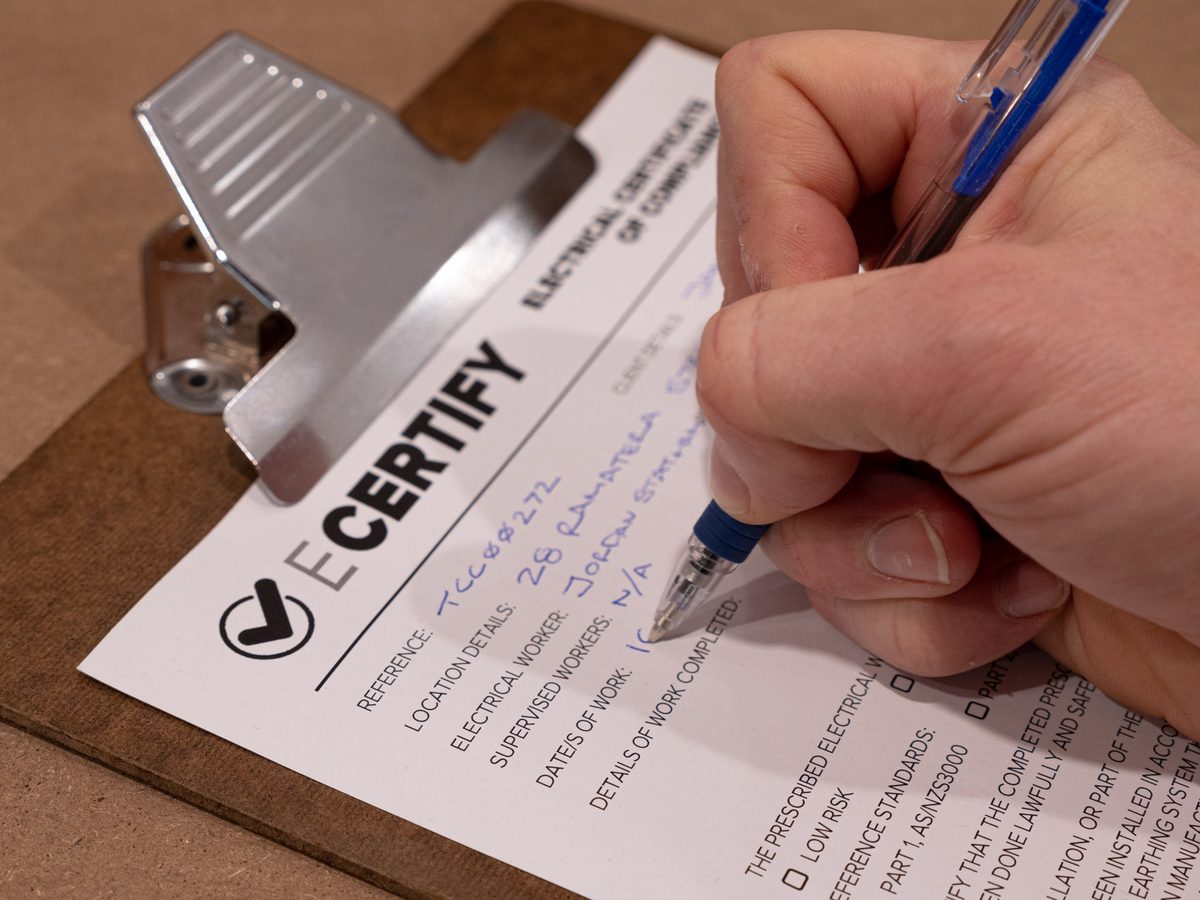
ESC stands for electrical safety certificate: the certificate, required by regulation 74A of the Electricity (Safety) Regulations 2010, stating that an installation is connected to the power supply and safe to use after electrical work. eCertify issues ESCs in Auckland for the work eCertify carries out.
In eCertify's reading of the regulations, an electrical safety certificate does not run out, but it only speaks for one date: the date of connection, which regulation 74A requires it to state. It says nothing about later work or damage, which is why an insurer asking about a house today often wants a current inspection, the job eCertify's insurance package does.
The person who issued an electrical safety certificate must keep a copy for at least 7 years (regulation 74G). eCertify's advice to owners is to keep your copy with the house papers for as long as you own the property and pass it to the buyer when you sell.
No. An eCertify electrical safety check is an inspection of the whole installation with a written report on what is safe, what needs work and what can wait. An electrical safety certificate is issued after electrical work is connected. eCertify's electrical safety check is NZ$249.90 including GST, and eCertify's electrical safety check page sets out what it covers.
An electrical safety certificate comes from the person who completed the electrical work, so eCertify issues ESCs only for work eCertify carries out. For an existing house with no new work, eCertify inspects, tests and, if the installation is safe, issues a CoV on the day: NZ$269.90 including GST for insurance, NZ$259.90 including GST for building consent. If the wiring's condition is unknown, eCertify's electrical safety check is NZ$249.90 including GST. Every eCertify price includes callout and mileage anywhere in the Auckland region.
Tell eCertify who has asked for an electrical safety certificate and where the property is. The office will confirm which document you need and its fixed price, including GST, before anything is booked. Auckland region only.

787 Riddell Road, St Heliers, Auckland 1071
09 302 0884office@ecertify.co.nzFind us on Google MapsGet in touch any time. On-site work runs Monday to Friday, 7am to 5pm.
Our team are fully accredited and qualified electrical professionals.

Copyright © eCertify. All rights reserved.