
Section 5 of AS/NZS 3000:2018, earthing and bonding: eCertify lists 18 of 20 marked changes since 2007 and explains each one in a single plain sentence.
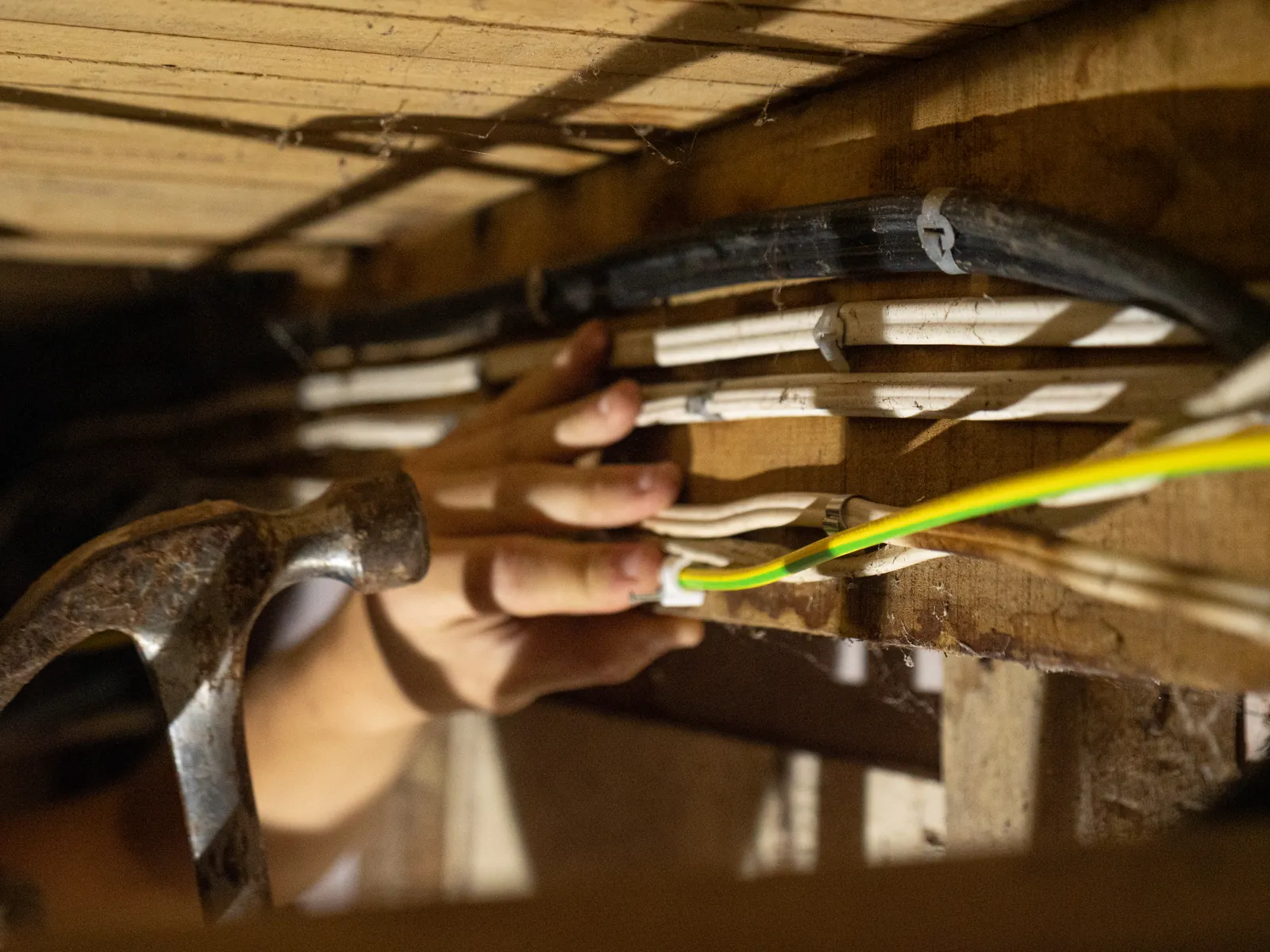
This page is part of eCertify's guide to what changed from AS/NZS 3000:2007 to 2018. It covers Section 5, which the standard calls Earthing arrangements and earthing conductors: the MEN system, earth electrodes, outbuildings, unprotected consumer mains, and equipotential bonding, pools and spas included.
AS/NZS 3000:2018 marks 20 items in Section 5 as changed. This page lists 18 of 20 marked changes; the other two are typographical fixes to drawings. eCertify read every one against the 2007 edition or the amendment itself. The real substance is in outbuildings, unprotected consumer mains and pool bonding, and none of them is modified for New Zealand.
eCertify's short version of what Section 5 now asks of you on the job:
Wherever the 2018 edition changed a clause, table or figure significantly from 2007, it prints an asterisk beside it in the margin. Amendments 1 to 3 flag their own edits with a bar and a tag. Either mark tells you that something changed, never what. So eCertify read each marked Section 5 item side by side with the 2007 edition, checked each amendment-only item against the amendment's own instructions, and summed up the difference in a single plain sentence. Smaller edits the standard left unmarked are not listed here, and nor are marked edits that are purely typographical.
The clause numbers and headings are the standard's. The sentences are eCertify's, so go to the standard itself before you rely on a detail on the job.
New Zealand check: the Electricity (Safety) Regulations 2010 modify the Wiring Rules for New Zealand in their Schedule 2, and none of those modifications touches these items; the October 2026 amendment to that schedule changed a Section 2 clause only. None of them is marked as applying in Australia only. Under Schedule 1AA of the same regulations, complying with the 2007 edition stopped counting as compliance at the close of 12 November 2026.
Jordan Statham, eCertify's director, is an EWRB-registered electrical inspector. When eCertify issues a certificate of verification for an existing Auckland home, the main earthing system is part of what gets inspected and tested.
eCertify's side-by-side read found three changes of substance in the core earthing rules.
Clause 5.1.4, Other earthing systems. A fifth example joins the list of permitted alternatives to MEN, covering IEC 60364 series installations, which may use TN, TT or IT earthing, whereas in 2007 those three systems appeared only in the surface-mines example.
Clause 5.3.5.1, MEN connection, general. The MEN link, or the NE connection where an exception allows one, now has to go in an accessible position so it can be disconnected and tested, and the 2007 clause had no such rule.
Table 5.2, Acceptable earth electrodes. Rod electrodes in stainless steel no longer have to be clad, and a horizontal electrode of galvanised steel pipe gains a minimum 3 mm wall thickness alongside the 20 mm diameter it already had.
eCertify found four marked items that hang on a new split between two kinds of outbuilding. An individual outbuilding (clause 1.4.88) has its own switchboard and stands apart, across open ground, from the building whose switchboard feeds it. A combined outbuilding (clause 1.4.89) is a group of structures sharing a foundation, metal roof or metal framing, with more than one supply. The 2007 water-pipe bonding examples, Figures 5.4 and 5.5, are now 5.7 and 5.8.
Clause 5.4.6.1, Structural metalwork, general. The earthing rule for building frames widens from dwellings to every structure containing part of an installation, permanently wired sheds included, sizes the frame earth from clause 5.3.3, and asks for a separate frame earth connection in each building of a combined outbuilding (Amendment 1 corrected the word there from bonding to earthing).
Clause 5.5.3.1, Outbuildings. An individual outbuilding may still be earthed by a protective earthing conductor or as a separate MEN installation, whereas combined outbuildings may only use the protective earthing conductor, never their own MEN, and 2007 allowed either for every outbuilding.
Figure 5.4, Earthing an individual outbuilding. New, and replaced again by Amendment 1: an outbuilding switchboard carrying its own MEN link, supplied by a submain without an earth conductor, with a note allowing a submain earth cable instead of the MEN link and electrode.
Figure 5.5, Earthing combined outbuildings. New, and also replaced by Amendment 1: combined outbuildings supplied by a submain that includes a protective earthing conductor, with no MEN link or electrode at their switchboard.
Clause 5.5.3.5 deals with exposed metalwork, such as switchboard cases and wiring enclosures, on consumer mains that nothing upstream protects against short circuit. eCertify found the clause itself amended and three drawings for it that the 2007 edition did not have. For the paperwork side of mains work, see eCertify's guide to high-risk electrical work and mains inspections.
Clause 5.5.3.5, Unprotected consumer mains. Amendment 1 replaced the clause's second paragraph with a definition of unprotected consumer mains as those with no service protective device in front of them, pointing to Figure 2.1, which the same amendment redrew (see Section 2, protection and switchboards).
Figure 5.6(A), Enclosure earth to main neutral. Drawn for the first option: the earth from the enclosure lands on the main neutral bar and is rated at no less than the main neutral itself.
Figure 5.6(B), Enclosure earth to main earth bar. Drawn for the second option: the earth lands on the main earth bar, and the MEN link then has to match the main neutral's cross-section or better.
Figure 5.6(C), Double-insulated mains exception. Drawn for the exception: mains kept double insulated all the way to the service protective device, with that device providing short-circuit protection, need none of the extra earthing.
Two marked items sit in the general bonding clauses, by eCertify's count.
Clause 5.6.2.1, Equipotential bonding, general. Among the installation types that carry additional bonding requirements, elevated access floors drop out and inverters connected to the grid (AS/NZS 4777.1) come in; the inverter side is on Section 7, solar, EV and special installations.
Clause 5.6.2.5, Showers and bathrooms. Every structure of a combined outbuilding that contains a shower or bathroom now bonds the concrete reinforcing in that structure separately, though a single conductor back to the earth bar of the board feeding the whole outbuilding will do if the reinforcing runs continuously through all of it, and the 2007 clause did not mention outbuildings.
eCertify's read of the five pool and spa items: a new clause order, a conductive pool now bonded in almost every case, and nearby fixed metal bonded only where it touches the ground. Pool zones are in Section 6, bathrooms, pools and spas.
Clause 5.6.2.6.1, Bonding arrangement. The clause listing everything to be joined by the bonding conductor moves from the back of the pool clauses (5.6.2.6.5 in 2007) to the front, adds a 0.5 ohm ceiling on that conductor's resistance, and points to Figure 5.9.
Clause 5.6.2.6.2, Conductive pool structures. A conductive pool's connection point now has to be fitted and tied to the installation earthing system in its own right, not only when pool equipment or fixed metal calls for bonding, except where the shell or deck steel is continuous with slab steel already bonded under clause 5.6.2.5.
Clause 5.6.2.6.3, Pool equipotential bonding conductor connection point. The rules for the connection point itself (position, marking its location, construction, and protection from damage and corrosion) carry over from 2007's clause 5.6.2.6.4, but where the 2007 wording asked for a connection point at the pool with no condition attached, 2018 asks for one only where the pool structure is conductive.
Clause 5.6.2.6.5, Conductive fixtures and fittings. Fixed metal within arm's reach of the pool edge, ladders and diving boards included, is now bonded only where it is in contact with the general mass of earth, directly or indirectly, and is not already joined to the pool shell or deck through the slab steel it is set into, while a conductive pool structure on its own now triggers this bonding, where in 2007 only pool electrical equipment did.
Figure 5.9, Pool and spa bonding example. An illustration, new in 2018, of one whole pool bonding scheme: mesh, connection point, pump, ladder, fence, lamp posts and the bond back to the switchboard earth.
In Section 5 of AS/NZS 3000:2018, 18 of 20 marked changes are changes of substance. Comparing them with 2007, eCertify finds the weight in four areas: outbuildings now come in two kinds with different earthing rules, unprotected consumer mains get three new drawings, the MEN link must be reachable for testing, and a conductive pool is bonded whether or not anything else at the pool is. One is an Amendment 1 edit only, and New Zealand modifies none of them.

787 Riddell Road, St Heliers, Auckland 1071
09 302 0884office@ecertify.co.nzFind us on Google MapsGet in touch any time. On-site work runs Monday to Friday, 7am to 5pm.
Our team are fully accredited and qualified electrical professionals.

Copyright © eCertify. All rights reserved.