
Section 8 of AS/NZS 3000:2018, verification and testing: eCertify lists 16 of 17 marked changes since 2007, plus one unmarked, each in one plain sentence.
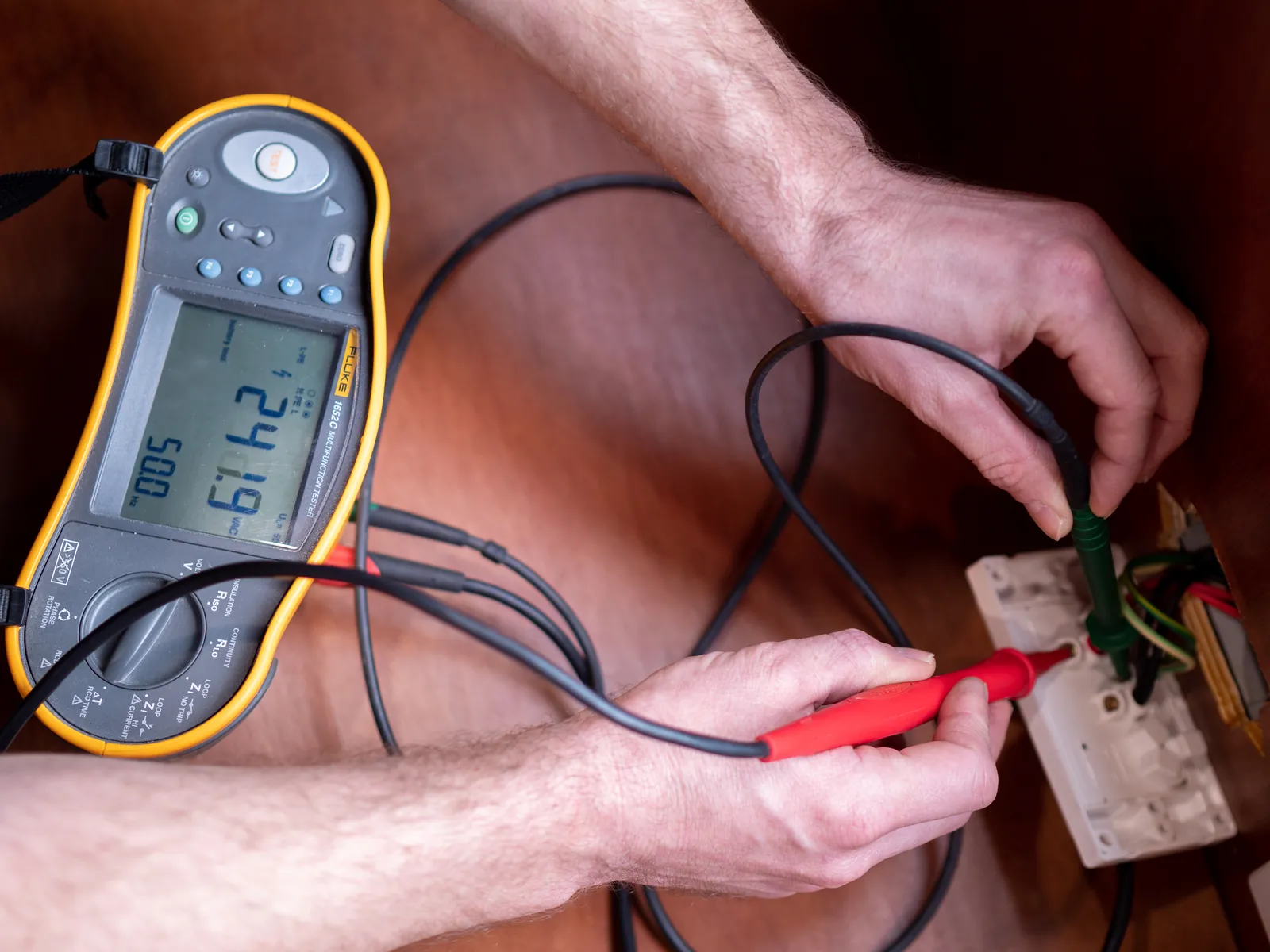
This page is part of eCertify's guide to what changed from AS/NZS 3000:2007 to 2018. It covers Section 8, which the standard calls Verification: the visual inspection checklist, the mandatory tests from earth continuity through insulation resistance, polarity and loop impedance to RCD operation, and the record left at the switchboard.
AS/NZS 3000:2018 marks 17 items in Section 8 as changed. This page lists 16 of 17 marked changes, plus one unmarked change that the standard's own preface names; the other marked item only moves an existing rule into its own numbered subclause. eCertify read every one against the 2007 edition or the amendment itself. The real substance is in RCD testing, loop impedance and the merged polarity test, and New Zealand modifies one clause, the RCD test in 8.3.10.
eCertify's short version of what Section 8 now asks of you when you test:
Wherever the 2018 edition changed a clause, table or figure significantly from 2007, it prints an asterisk beside it in the margin. Amendments 1 to 3 flag their own edits with a bar and a tag. Either mark tells you that something changed, never what. So eCertify read each marked Section 8 item side by side with the 2007 edition, checked each amendment-only item against the amendment's own instructions, and summed up the difference in a single plain sentence. Marked edits that only renumber or move a rule are not listed. Smaller edits the standard left unmarked are not listed either, with one exception: the extra-low voltage test list, which the preface names as a change but the margin does not mark.
The clause numbers and headings are the standard's. The sentences are eCertify's, so go to the standard itself before you rely on a detail on the job.
New Zealand check: the Electricity (Safety) Regulations 2010 modify the Wiring Rules for New Zealand in their Schedule 2, and three of those modifications rewrite clause 8.3.10, so the RCD item below gives the New Zealand position, not the printed one. No other item on this page is modified, and none is marked as applying in Australia only. The October 2026 amendment to that schedule reinstated the ban on switching a PEN conductor, a Section 2 rule that sits comfortably with the polarity results in clause 8.3.7.2. Under Schedule 1AA of the same regulations, complying with the 2007 edition stopped counting as compliance at the close of 12 November 2026.
Jordan Statham, eCertify's director, is an EWRB-registered electrical inspector. On a certificate of verification for an existing Auckland home, eCertify tests as it inspects, and the RCDs are part of that.
eCertify's side-by-side read found two marked changes that apply before any test instrument comes out.
Clause 8.1.3, Periodic inspection and testing. Periodic inspection gets its own clause, which now says plainly that it is to be done to the requirements of the regulator and of the owner or occupier together, where 2007 offered those two as alternatives; in New Zealand, regulation 75 of the Electricity (Safety) Regulations lists the installations that legally need periodic assessment, such as caravan parks, marinas and construction sites.
Clause 8.2.2, Checklist. The checklist changes from a guide into items that must be checked where they apply, adding moisture ingress, suitability for the intended voltage, current and frequency, and a pointer to Appendix Q for DC circuits, and Amendment 1's note adds that an RCD whose type marking cannot be read should be replaced before testing.
eCertify found two marked items on how testing is carried out and written down, one of them new in Amendment 2.
Clause 8.3.2.1, General. AS/NZS 3017 is now named as the source of minimum safety standards for test instruments as well as test methods, and the clause adds that testing must not put the tester, people nearby or the test equipment at risk; Amendment 2 only gave this paragraph its own number.
Clause 8.3.2.2, Recording of results. New in Amendment 2: the standard recommends that test results, especially measured values, are recorded and kept, and notes that the law may set the format, and in New Zealand regulation 67(3) of the Electricity (Safety) Regulations lets you add test results to a certificate of compliance.
By eCertify's count, one marked item changes the list of mandatory low voltage tests, and the preface names a second, unmarked change for extra-low voltage.
Clause 8.3.3.1, Low voltage. PEN conductors join the earth continuity test, and a new exception lets you leave out loop impedance testing where automatic disconnection of supply is not the method of fault protection; Amendment 1 only corrected a cross-reference in a note.
Clause 8.3.3.2, Extra-low voltage (not marked; named in the preface). Extra-low voltage parts now get their own test list in Section 8, with earth continuity and polarity on PELV circuits and correct circuit connections alongside the insulation resistance check, where 2007 asked only for that insulation resistance check of separation, in Section 7.
eCertify's read found two marked changes to the first tests in the sequence.
Clause 8.3.5.1, General. PEN conductors are now part of the earth continuity test, and where a PEN submain is installed under clause 5.5.3.1(c), the test has to show that the sub-board earth bar is joined through the PEN conductor to the main switchboard earth bar (outbuilding earthing is on Section 5, earthing and bonding).
Clause 8.3.6.3, Results. The lower readings accepted for sheathed heating elements, equipment with its own standard and RCD functional earths now sit together as exceptions to the minimum, and new notes explain that readings fall with cable length and temperature and give typical readings to expect from PVC and XLPE runs.
eCertify found three marked items here, all from Amendment 2, which folded the old correct circuit connections clause, 8.3.8, into the polarity clause.
Clause 8.3.7, Polarity and correct circuit connections. Polarity and correct circuit connections now share one clause, with clause 8.3.8 left as a deleted placeholder, though the mandatory test list in clause 8.3.3.1 still points to 8.3.8.
Clause 8.3.7.1, General. The purposes of the test now take in the old 8.3.8 ones, earth conductors carrying current in normal use and short circuits between conductors, and a note says a PEN conductor does not count as a protective earthing conductor here.
Clause 8.3.7.2, Results. The results now include the old 8.3.8 checks for short circuits and links between circuits, plus a new one that no protective earthing conductor runs in parallel with a neutral, and switches or protective devices must not operate in an earthing or PEN conductor at all, where 2007 barred only their independent operation there.
This check was never modified, even while New Zealand disapplied the PEN switching ban in clause 2.3.2.1.2 from 13 November 2025 to 1 October 2026. WorkSafe, which recommended that change, has said it was groundwork for EV charger open-PEN protection and island-mode backup; MBIE restored the ban from 2 October 2026, citing safety concern in the sector, after inspectors and engineers warned that an open PEN can make earthed metalwork live with no fault present. A PEN or earth switch fitted in that window can stay only if it is not electrically unsafe and complied at the time, and with this check unchanged, whether it ever complied is open to argument: assess it rather than pass it on sight.
eCertify's comparison found four marked items on loop impedance: when the test is needed, how it is done, and the two tables behind it. The circuit route-length tables these rely on are on the appendix changes page.
Clause 8.3.9.1, Low voltage socket-outlet circuits. The loop test is now required on circuits that rely on automatic disconnection, supply socket-outlets and are not protected by an RCD of 30 mA or less, where 2007 named socket circuits without an RCD, and new notes explain why RCD-protected sockets, separated supplies and other circuits are not loop tested, though their trip times still have to be met.
Clause 8.3.9.2.2, Supply available. Amendment 1 rewrote the live test: use a loop impedance tester on each branch of every final subcircuit, at the socket-outlet furthest from the supply, with the MEN connection left in, where 2007 asked for a reading at the most distant point of the circuit.
Table 8.1, Maximum loop impedance values. The values are now given to one decimal place, the title makes clear they cover the whole loop including the supply transformer, and new notes give the basis (mean tripping values, instantaneous breaker operation) and send you to AS/NZS 3017 for tester tolerances.
Table 8.2, Maximum final subcircuit resistance. The table is now set out by protective device rating, drops the separate active conductor column, adds a 5 second column for HRC fuses and rounds to one decimal place, and Amendment 1 replaced its column headings so each names the device type and disconnection time.
eCertify's read of the RCD clause starts with New Zealand law, because Schedule 2 rewrites it. RCD types are on Section 2, protection and switchboards, and eCertify's guide to RCD testing and RCD types covers the test in practice.
Clause 8.3.10, Operation of RCDs. The printed clause swaps 2007's separate Australian and New Zealand rules for one test on every RCD, by its test button or a test instrument, plus proof that every switched pole has opened after the trip, but in New Zealand modifications 9 to 11 take away the test-button option, make the function test cover trip time and operation on AC and pulsating DC residual current, and strike out the note saying operating time need not be tested.
eCertify found one marked change in what is left on site when the job is done.
Clause 8.4, Verification records. The date of first certification must now be marked permanently and indelibly on or at the main switchboard, where 2007 only recommended that the date of first energising or certification be available on site, by a marking or an accessible record; for verifying an existing installation, see eCertify's guide to the certificate of verification.
In Section 8 of AS/NZS 3000:2018, 16 of 17 marked changes are changes of substance, and the page adds one unmarked change for extra-low voltage. Comparing them with 2007, eCertify finds the weight in four areas: New Zealand's version of the RCD test, with every RCD instrument-tested and trip time included; loop impedance, tested on every branch of a socket circuit that lacks 30 mA RCD protection; polarity and circuit connection checks merged into one test; and a permanent first-certification date at the main switchboard. Five come from Amendments 1 and 2 alone, and New Zealand modifies one, clause 8.3.10.

787 Riddell Road, St Heliers, Auckland 1071
09 302 0884office@ecertify.co.nzFind us on Google MapsGet in touch any time. On-site work runs Monday to Friday, 7am to 5pm.
Our team are fully accredited and qualified electrical professionals.

Copyright © eCertify. All rights reserved.