
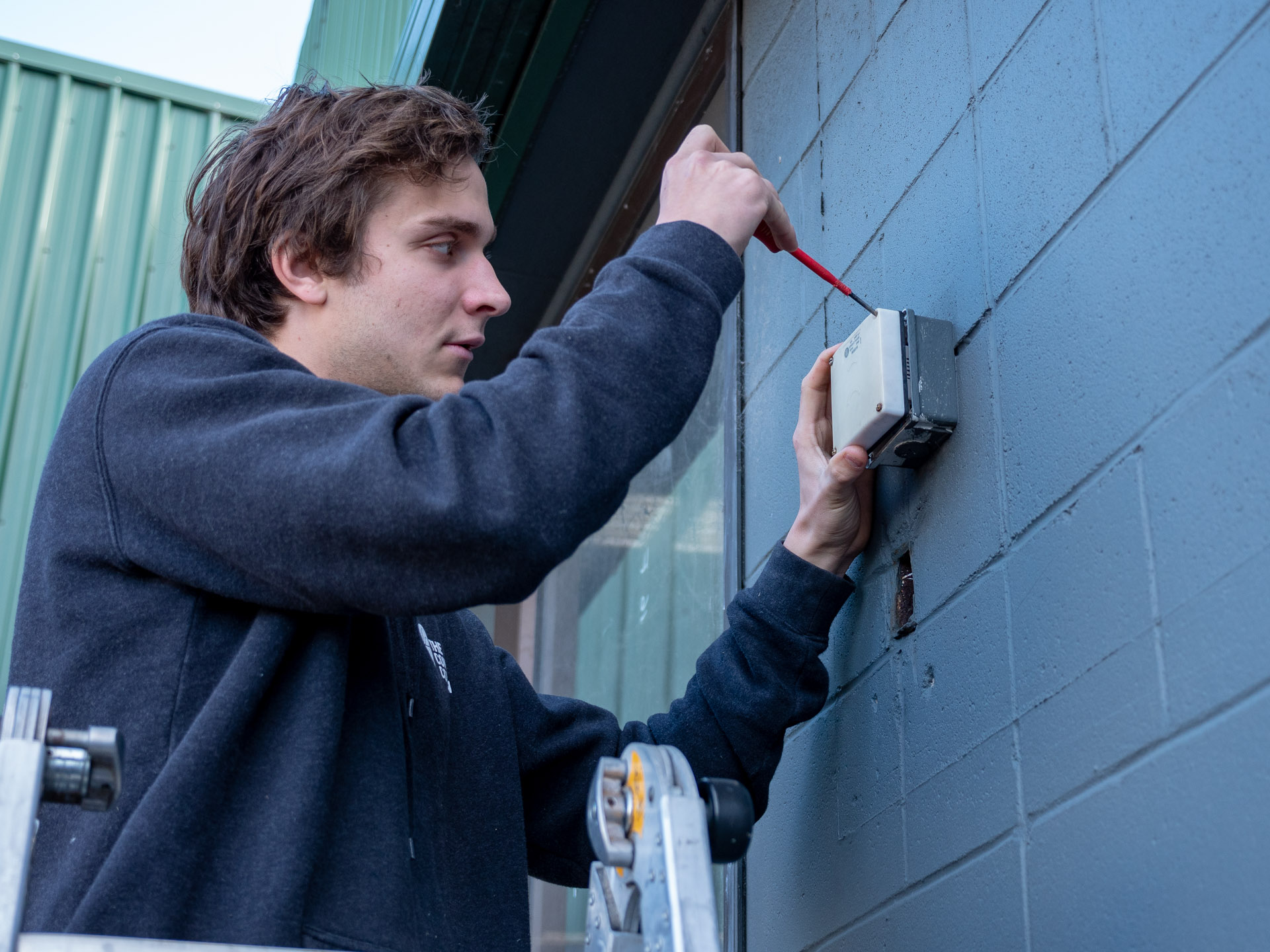
Done mains work or a solar install and need it inspected? eCertify, an Auckland electrical certification and inspection company, inspects mains work and solar PV for electricians across the Auckland region and issues the Record of Inspection (ROI). An ROI is the independent inspector's signed record of whether high-risk electrical work complies with the Electricity (Safety) Regulations 2010 and is electrically safe.
Regulation 70 of those regulations requires high-risk work to be inspected, and regulation 65(4) says the job is not complete until your certificate of compliance (COC) and the ROI are both issued. eCertify attends mains work and parallel generation, including solar PV and battery or generator systems.
eCertify's fixed prices are NZ$349.90 including GST for a mains work inspection and NZ$449.90 including GST for a solar PV inspection up to 10 kW. eCertify puts the ROI in your hands within 48 hours of the inspection and lodges the job on Energy Safety's High Risk Database. Auckland region only.
Last reviewed by Jordan Statham, registered electrical inspector (EW129010), 11 October 2026
You can get a mains work or solar inspection in Auckland from eCertify, which inspects high-risk electrical work for electricians across the Auckland region, with callout and mileage inside the fixed price.
eCertify attends two of the high-risk categories in regulation 6A(2) of the Electricity (Safety) Regulations 2010: mains work, and parallel generation, including solar PV and battery or generator systems. The regulation also lists high voltage, hazardous areas, installations for electrical medical devices and others. Those are specialist fields and eCertify does not attend them.
What eCertify gives Auckland sparkies on top of the inspection:
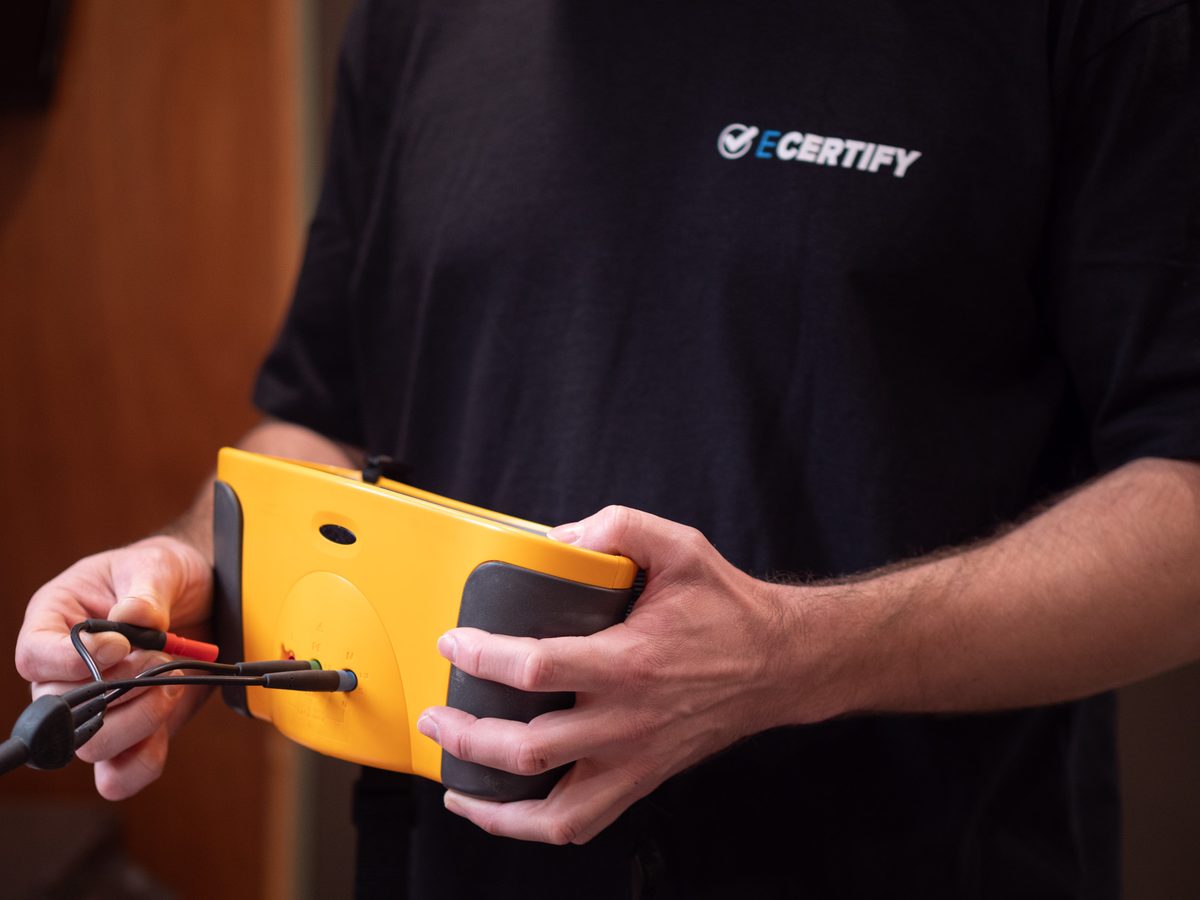
An electrical ROI in NZ can only be completed by an inspector authorised to inspect high-risk prescribed electrical work who did not do, supervise or certify that work. The Electricity (Safety) Regulations 2010 set four requirements:
eCertify's director, Jordan Statham, is an EWRB-registered electrical inspector (EW129010, Electrical Inspector class), registered since 2017. The Electrical Workers Registration Board's public register shows every practitioner's class, so you can check any inspector before you book, Jordan included.
High-risk prescribed electrical work on a low or extra-low voltage installation needs an ROI: regulation 70(1) requires the work to be inspected, and regulation 72(1) requires a written record of that inspection. eCertify inspects two kinds of it.
Mains work. Regulation 4 defines it as work on the mains (the fittings that supply the MEN switchboard closest to the point of supply), on the main earthing system, or on the MEN link in that switchboard. New consumer mains, a new main earth or electrode, and terminating the mains at a new MEN switchboard all count.
Solar PV and parallel generation. Regulation 6A(2) lists photovoltaic systems and mains parallel generation systems as separate high-risk items. Regulation 60(2) adds the standards: AS/NZS 5033 for a PV array, and AS/NZS 3010 and AS/NZS 4777.1, as applicable, for low voltage parallel generation connected to the national grid. eCertify inspects grid-tied solar PV and battery or generator systems.
Switchboard swaps are where the arguments start. eCertify's guide to high-risk electrical work and mains inspections works through them, with the full regulation 6A list.
eCertify charges NZ$349.90 including GST for a mains work inspection and ROI, and NZ$449.90 including GST for a solar PV inspection and ROI on a standard residential or light commercial system up to 10 kW.
| Inspection and ROI | eCertify price, including GST | How to book |
|---|---|---|
| Mains work (consumer mains, main earth, MEN link) | NZ$349.90 | Book online |
| Solar PV up to 10 kW, standard residential or light commercial | NZ$449.90 | Enquire or call 09 302 0884 |
| Mains work and solar PV up to 10 kW on the same visit | NZ$449.90 | Enquire or call 09 302 0884 |
| Solar PV above 10 kW | Quoted before booking | Enquire |
| Battery or generator system, no PV | Quoted before booking | Enquire |
Each eCertify price is the total: callout and mileage anywhere in Auckland, the inspection and testing, the ROI and the High Risk Database lodgement. The solar inspection is not in eCertify's online store yet, so book it through the form below or by phone. Mains work and solar PV up to 10 kW on the same job is one eCertify inspection at NZ$449.90 including GST, not two.
Re-inspection is extra. If eCertify has to come back for something that should have been ready on the day, a re-inspection charge applies. eCertify's full price list is on its electrical inspection cost page.
High-risk work ends with three documents from two people. On an eCertify job, you issue the COC and the ESC, and eCertify issues the ROI.
Regulation 65(4) ties them together: high-risk work is not complete until the COC and the ROI are both issued. Insurers and councils often call the whole family "energy works certificates". That is the everyday umbrella name, not a legal one, and eCertify's guide to electrical certificates sets them side by side.
eCertify asks for the items below on site before the inspector arrives. A missing item that forces a second visit is charged as a re-inspection.
Mains work:
Solar PV and parallel generation:
eCertify sends the full pre-inspection checklist when you book.
eCertify puts the ROI in your hands within 48 hours of the inspection, and eCertify lodges the job on Energy Safety's High Risk Database for you. Regulation 74F(1) makes lodging the inspector's job, not the electrician's.
eCertify keeps a copy of every ROI for at least seven years, as regulation 72A(1)(b) requires, so if a customer asks you for it in year five, eCertify can produce it.
In a hurry? If a livening or a customer is waiting on you, say so when you book. eCertify can often fit in an urgent inspection, depending on the day's bookings.
The regulations set their own outer limits as well. An inspector has 20 working days after issuing an ROI to give a copy to the person who contracted for the work (regulation 72A(1)(a)), and 20 working days after its date to lodge it (regulation 74F(1)). Those are legal limits, not eCertify's service standard.
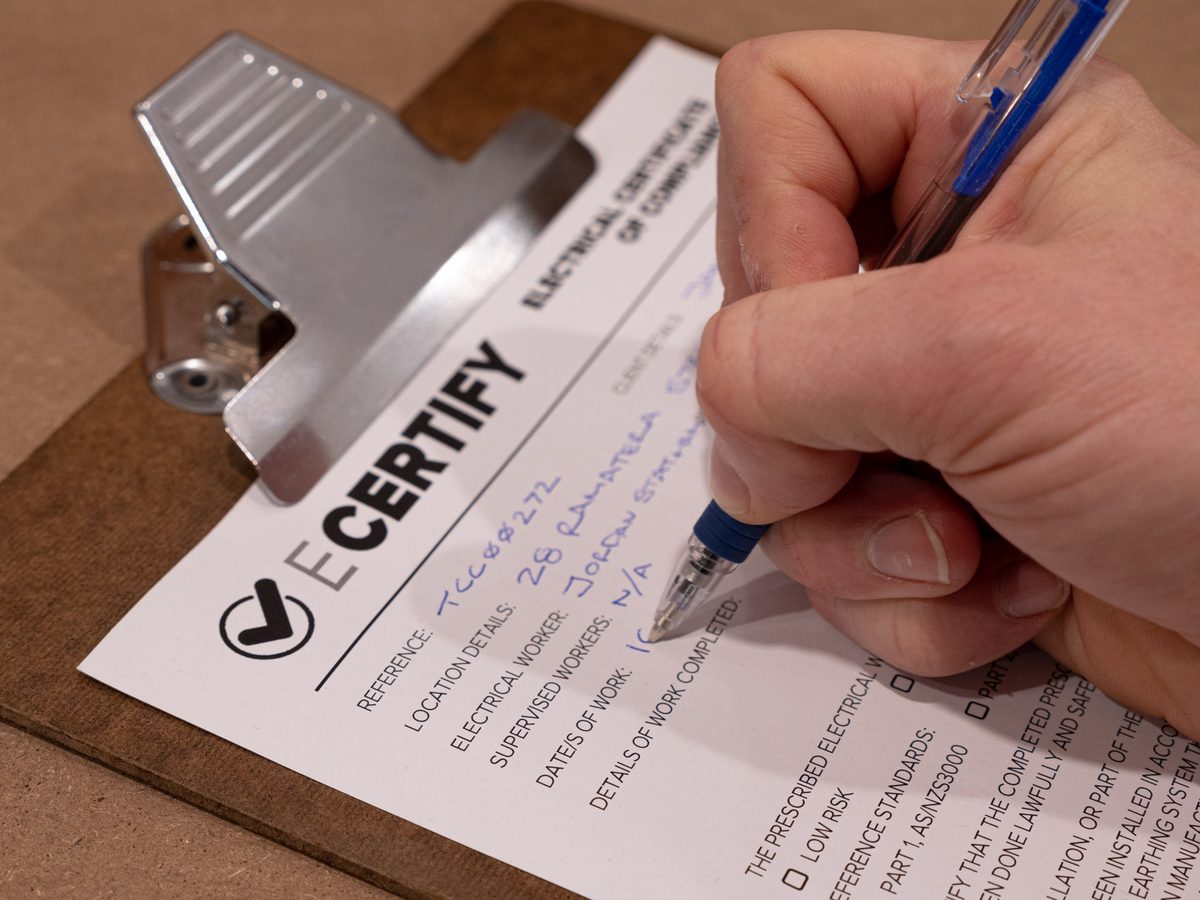
In New Zealand electrical work, ROI stands for Record of Inspection: the written record an inspector prepares after inspecting high-risk prescribed electrical work, as regulation 72 of the Electricity (Safety) Regulations 2010 requires. eCertify issues ROIs for mains work and solar PV across Auckland.
Regulation 71(2) of the Electricity (Safety) Regulations 2010 bars anyone who carried out the work, supervised someone carrying it out, or issued its COC. That rules out you, anyone who worked on the job with you, and whoever supervised you on it. eCertify checks all three roles before accepting a booking, and an eCertify inspector who held any of them declines the job.
eCertify gives you a written list of what needs fixing, each item tied to the regulation or standard it does not meet. A finding eCertify cannot cite is not a finding. Fix the items and eCertify re-inspects, for a re-inspection charge. If the work presents an immediate danger, regulation 19 of the Electricity (Safety) Regulations 2010 requires the inspector to tell the owner or occupier and WorkSafe. eCertify isolates the affected part with the owner's permission first, then reports.
No. eCertify is not a metering equipment provider (MEP) and does not install, relocate, re-seal or inspect energy meters. Metering work goes through the property's energy retailer or its metering equipment provider, and is inspected by a network warranted electrical inspector. Tell eCertify if metering is in scope and the office will point you to one in your area.
eCertify inspects mains work and parallel generation, including solar PV and battery or generator systems, for electricians across Auckland, and issues the Record of Inspection that regulation 65(4) says high-risk work needs before it is complete. eCertify's fixed prices are NZ$349.90 including GST for mains work and NZ$449.90 including GST for solar PV up to 10 kW, and larger solar and battery or generator systems are quoted. eCertify puts the ROI in your hands within 48 hours of the inspection and lodges the job on the High Risk Database. The inspector is independent of your work, as regulation 71(2) requires, and eCertify is not a metering equipment provider.
Book mains work online in a few minutes, or tell eCertify about your solar, battery or generator job below. The office confirms the price, including GST, before anything is booked. Auckland region only.

787 Riddell Road, St Heliers, Auckland 1071
09 302 0884office@ecertify.co.nzFind us on Google MapsGet in touch any time. On-site work runs Monday to Friday, 7am to 5pm.
Our team are fully accredited and qualified electrical professionals.

Copyright © eCertify. All rights reserved.