
AS/NZS 3000:2018 clause 2.9.7, a New Zealand-only clause, makes arc fault detection devices (AFDDs) mandatory on some 20 A or smaller final subcircuits. Separately, the ban on switching a PEN (combined protective-earth-and-neutral) or earthing conductor was lifted for 11 months and is now back in force, unmodified, from 2 October 2026.
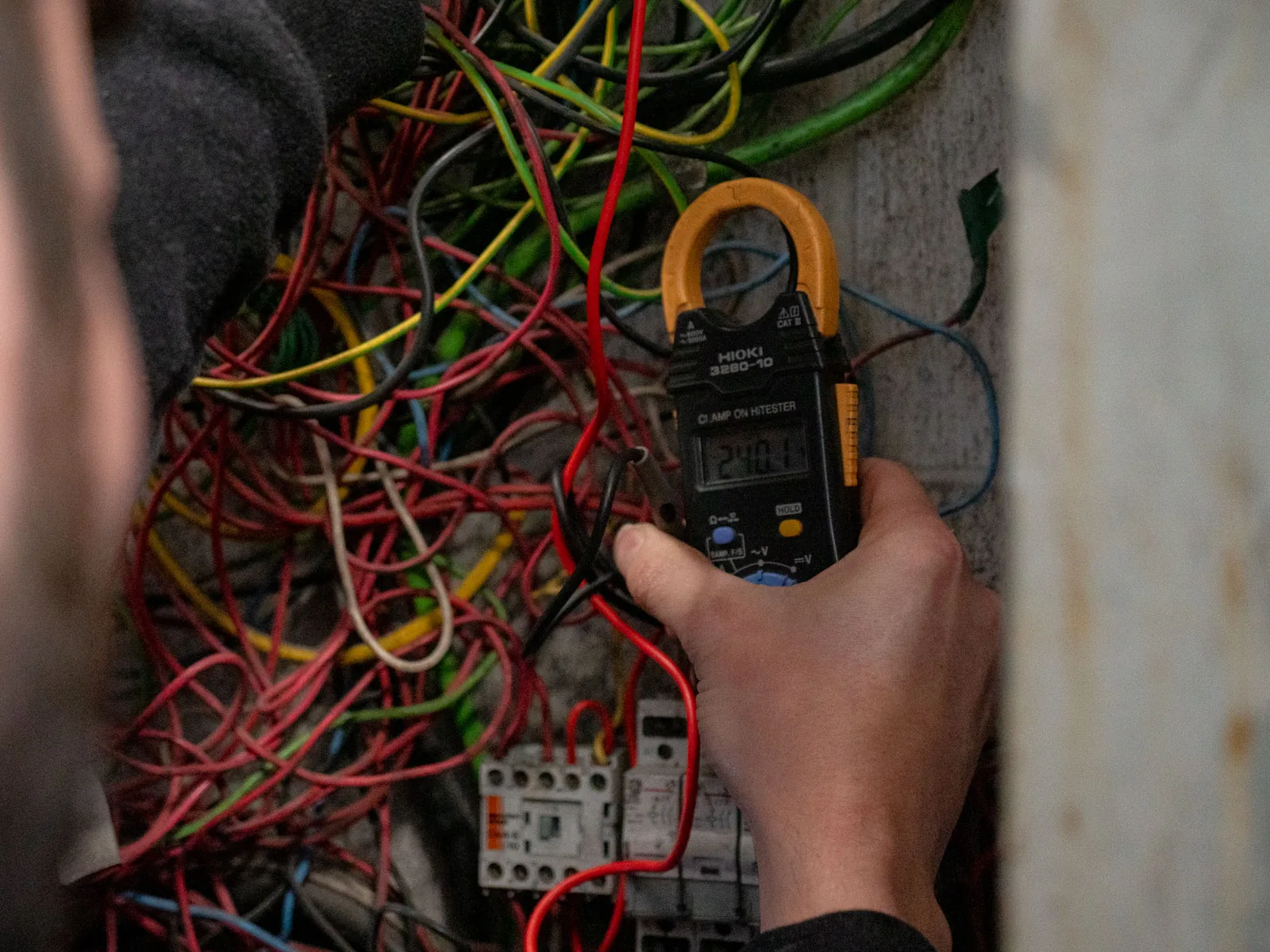
Part of eCertify's wider post on the AS/NZS 3000:2007-to-2018 transition, this one covers two code-compliance calls that come up directly on the jobs eCertify inspects: whether a circuit needs an AFDD, and whether a changeover switch is allowed to switch the PEN conductor.
Direct answer: AS/NZS 3000:2018 clause 2.9.7, a New Zealand-only clause, makes arc fault detection devices (AFDDs) mandatory on some 20 A or smaller final subcircuits. Separately, the ban on switching a PEN (combined protective-earth-and-neutral) or earthing conductor was lifted for 11 months and is now back in force, unmodified, from 2 October 2026.
An AFDD is a device that disconnects a circuit when it detects an arc fault, the kind of sparking that happens inside damaged cable insulation or a loose connection, before it can start a fire. AS/NZS 3000 clause 1.4.14 defines it in exactly those terms.
Clause 2.9.7 is a New Zealand-only addition with no equivalent in the 2007 edition. It requires an AFDD on every final subcircuit rated 20 A or less supplying:
Outside those four categories, AFDDs are not mandatory under this clause, though the standard notes they may still be used to supplement protection on aged wiring.
No. The mandatory rule in clause 2.9.7 only applies to the four location types above, each on a final subcircuit of 20 A or less. A general household power or lighting circuit outside those categories does not trigger the requirement on its own.
eCertify inspects and certifies this work rather than pricing or supplying the devices, so a figure here would be a guess. If an AFDD is required on your job, get a cost from the electrician doing the installation; it is a straightforward swap at the originating switchboard, same footprint as a standard circuit breaker, wired in the same way.
Clause 2.3.2.1.2(b) and (c) of AS/NZS 3000 bans two things: switching a neutral conductor on consumer mains, and switching a conductor used as a combined protective-earth-and-neutral (PEN) conductor; part (c) separately bans switching or isolating any earthing conductor. From 13 November 2025, a New Zealand modification disapplied that ban, to let backup, changeover and island-mode arrangements for solar, battery and generator systems switch those conductors.
That modification has now been revoked. The Electricity (Safety) Amendment Regulations 2026 (SL 2026/309) came into force on 2 October 2026 and removed the disapplication, so the printed clause is back in force, unmodified, from that date: no switching a neutral, PEN or earthing conductor. Anything installed under the short-lived exception, between 13 November 2025 and 1 October 2026, is specifically protected and does not need to be undone.
Yes, but from 2 October 2026 the changeover arrangement cannot switch the PEN conductor, the neutral of consumer mains, or an earthing conductor. A changeover arrangement wired before 2 October 2026, under the rule that was in force at the time, is unaffected and does not need to be changed. New work from 2 October 2026 has to be designed around the restored ban.
The disapplication was introduced to make backup and island-mode switching arrangements easier to design. The NZ Electrical Inspectors Association and others warned it could leave house metalwork live at 230 V in certain fault conditions, and MBIE restored the ban, in its own words, "to remove the risk of potential significant harm while further work is undertaken." For new work, the practical position is the same as it was under the 2007 edition: the printed clause never allowed switching those conductors, and from 2 October 2026 it does not allow it again.
AFDDs and PEN switching are both New Zealand-specific features of the citation that moved to AS/NZS 3000:2018 on 13 November 2025, alongside the RCD changes covered in eCertify's other spoke post. The same transition rules apply here as to the rest of the standard: an installation that already complied with the pre-13-November-2025 rules is not made non-compliant by the edition change, and existing changeover arrangements installed before 2 October 2026 are protected. The full detail on the transition and the 12 November 2026 deadline is in eCertify's main post on the AS/NZS 3000 2007-to-2018 change.
Whether an AFDD was fitted where required, and whether a changeover switch complies with the current PEN rule, are exactly the kind of findings that come up on a Mains Work ROI inspection. eCertify's Mains Work ROI service (NZ$349.90 including GST) covers that inspection and the Record of Inspection it produces; more on what counts as high-risk work is in eCertify's write-up of high-risk electrical work and mains inspections.
AS/NZS 3000:2018 clause 2.9.7 makes AFDDs mandatory in New Zealand on 20 A or smaller final subcircuits in four specific location types, a rule with no equivalent in the 2007 edition. The ban on switching a PEN, neutral or earthing conductor, lifted for backup and changeover arrangements from 13 November 2025, is back in force unmodified from 2 October 2026 under the Electricity (Safety) Amendment Regulations 2026 (SL 2026/309), with existing arrangements protected. eCertify, Auckland's electrical compliance specialist, checks both on a Mains Work ROI inspection, because each is an easy thing to get wrong on paperwork or design during a transition with this many moving dates.
On final subcircuits of 20 A or less supplying points in fire-risk material stores, locations with irreplaceable items, flammable historic buildings, or school dormitory socket circuits. Those are the four categories clause 2.9.7 names.
Anywhere outside those four categories. A standard household circuit with none of those features does not trigger the mandatory AFDD rule.
No, not from 2 October 2026. The ban on switching a PEN, neutral or earthing conductor is back in force under the Electricity (Safety) Amendment Regulations 2026 (SL 2026/309).
A conductor that combines the neutral and protective earth functions in a single wire, used in some New Zealand earthing arrangements.
No. Arrangements installed while the modification was in force are protected and do not have to be changed to meet the restored ban.

787 Riddell Road, St Heliers, Auckland 1071
09 302 0884office@ecertify.co.nzFind us on Google MapsGet in touch any time. On-site work runs Monday to Friday, 7am to 5pm.
Our team are fully accredited and qualified electrical professionals.

Copyright © eCertify. All rights reserved.