
A buyer books a pre-purchase electrical inspection before committing; a vendor books a pre-sale Certificate of Verification (CoV) before listing or settlement. Both are NZ$249.90 including GST with eCertify, cover the callout, testing and report or certificate, and answer different questions: the buyer finds out what they are taking on, the vendor shows the installation has already been checked. Neither replaces, or is replaced by, the general building inspection.
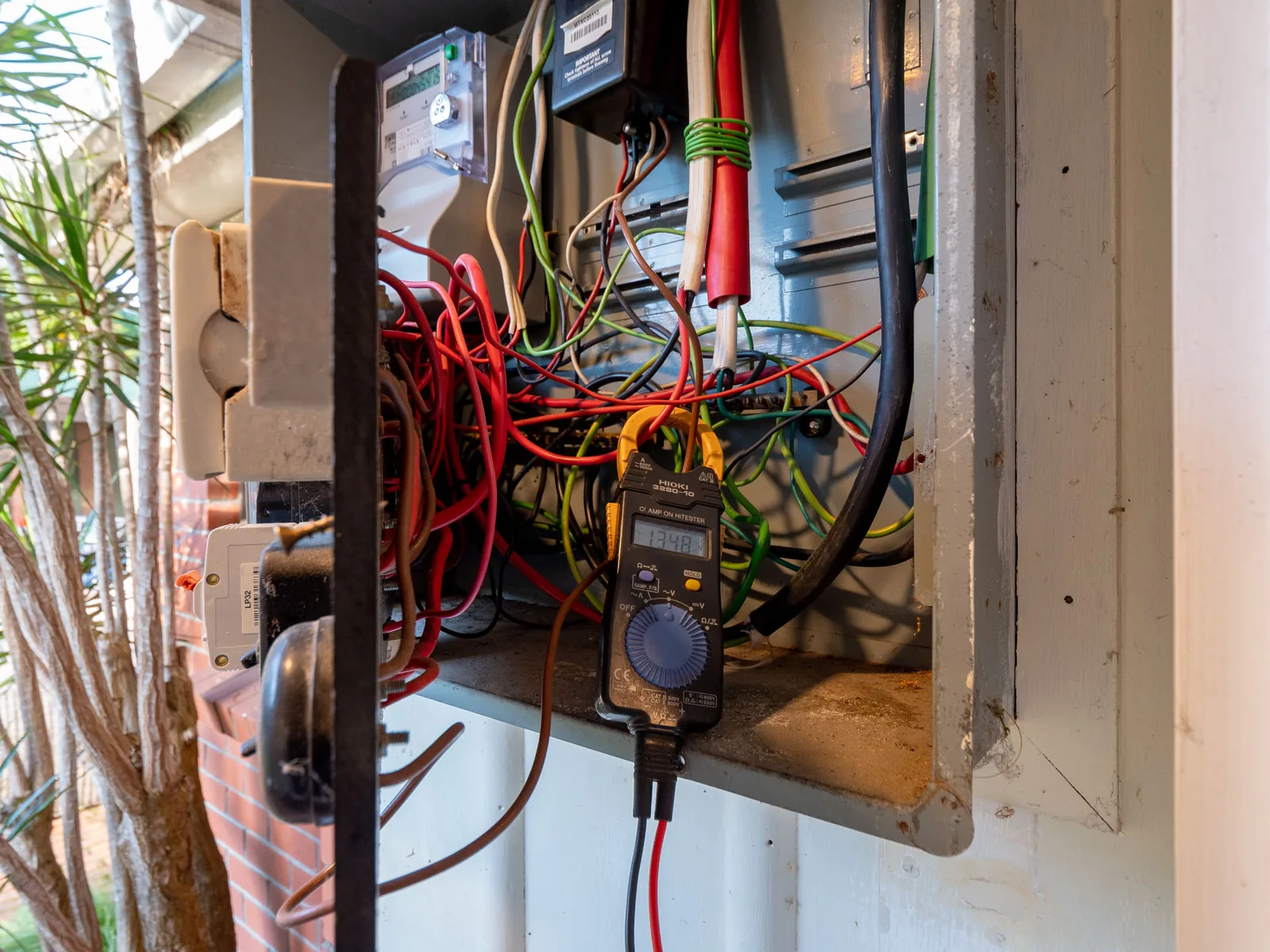
A building inspection looks at the roof, the framing and the subfloor. It does not test the wiring, because most building inspectors are not registered electricians and cannot legally carry out electrical testing. Whether you are buying or selling in Auckland, the electrical side is a separate job, with different paperwork depending on which side of the sale you are on.
Direct answer: A buyer books a pre-purchase electrical inspection before committing; a vendor books a pre-sale Certificate of Verification (CoV) before listing or settlement. Both are NZ$249.90 including GST with eCertify, cover the callout, testing and report or certificate, and answer different questions: the buyer finds out what they are taking on, the vendor shows the installation has already been checked. Neither replaces, or is replaced by, the general building inspection.
A pre-purchase electrical inspection is a full test of the installation before you commit to the property: switchboard, earthing, RCD protection, wiring and accessories, using instrument testing rather than a visual walk-through. It produces a written report, not a certificate, so you know the condition before settlement rather than after.
The most common finding worth watching for is not a specific fault so much as an absence: work that has been done and never certified. A legally required certificate that does not exist means nobody qualified has ever signed off that work, and it is the single biggest red flag a pre-purchase inspection turns up. Other common findings: a switchboard with no RCD protection, missing or inadequate earthing, undocumented additions by someone who was not an electrician, deteriorated rubber or cloth-insulated cable in an older house, and unsafe alterations in the roof space or under the floor.
If uncertified high-risk work (mains or solar/battery work) turns up, the position in law is specific: that work is not finished until both the electrical worker's Certificate of Compliance and an independent inspector's Record of Inspection have been issued, and the inspector checking it must not be the person who did it, supervised it, or signed the original certificate. A buyer who finds the paperwork missing is finding a real gap, not a technicality.
Full pricing and booking: eCertify's pre-purchase inspection page and the Auckland pricing page.
A pre-sale Certificate of Verification confirms the installation has been inspected and tested and is safe to connect, following verification against AS/NZS 3019, the standard for checking an existing installation. It is not a legal requirement to sell a house in most cases, so a vendor is not breaking any rule by skipping it. What it changes is timing and leverage: having it done before the property is listed means a buyer's own inspection (or their building inspector, prompting them to ask) is answering a question that is already settled, rather than opening a negotiation.
AS/NZS 3019 itself backs this timing: its guidance on how often an existing installation should be checked specifically flags occupancy change, a sale is exactly that, as a reasonable trigger for a check, regardless of how long it has been since the last one.
One case does carry a legal trigger rather than just good practice: if the property has been vacant and disconnected from supply for more than six months, reconnecting it requires a certificate issued under AS/NZS 3019 before power is restored. A long-vacant or estate sale is the situation where this actually comes up.
eCertify's pre-sale CoV is NZ$249.90 including GST, the same fixed, all-inclusive price as the pre-purchase inspection. Full detail: eCertify's buying or selling page.
What you book. A buyer books a pre-purchase electrical inspection to find out the condition of a property they do not yet own. A vendor books a pre-sale Certificate of Verification to confirm an installation they already own and are about to sell.
What you receive. A buyer gets a written report listing faults and risk. A vendor gets a certificate stating the installation has been verified safe to connect, or a remedial report if it has not passed, with the chance to fix and re-certify before settlement.
Who sees it. This is the point to get right. eCertify's reports and certificates go only to whoever ordered and paid for the job. A buyer's report is not shared with the vendor or the agent without the buyer's own say-so, and a vendor's CoV belongs to the vendor, to show to a buyer (or not) as they choose. Nobody at eCertify shares a report sideways without the person who commissioned it agreeing first.
What it costs. Both are NZ$249.90 including GST, Auckland wide, with the callout, testing and paperwork included in the price either way.
Yes, in a narrower way. New work still needs its Certificate of Compliance (and, for mains or solar work, a Record of Inspection) issued by the people who did and checked it. A new house changing hands is less likely to carry undocumented work, but it is not automatically exempt from a buyer wanting to confirm the paperwork is actually in order, particularly for any high-risk work like a grid-connected solar system.
A property vacant for more than six months, common with a deceased estate or a long settlement delay, cannot simply be reconnected to supply. Regulation 74 of the Electricity (Safety) Regulations 2010 requires a certificate issued in accordance with AS/NZS 3019 before reconnection, given by a person authorised to certify mains work. This is the same product as the pre-sale CoV above; it is worth booking before settlement day rather than finding out at the final walk-through that supply cannot be restored yet. If the whole installation's condition is in question rather than just the reconnection, the broader electrical safety check is the right starting point: see our electrical safety check guide.
Buying and selling need different electrical paperwork, and a building inspection covers neither: a buyer books a pre-purchase inspection to find out what they are taking on, and a vendor books a pre-sale Certificate of Verification to confirm the installation is already checked. Both are NZ$249.90 including GST with eCertify, all-inclusive, and each report or certificate goes only to the person who ordered it. The costliest finding in either direction is the same one: electrical work that was done and never certified, which is a gap worth finding before settlement, not after.
In most cases, none is legally required just to sell. A pre-sale Certificate of Verification is strongly recommended because it settles the buyer's question before they ask it. If the property has been disconnected from supply for more than six months, a certificate under AS/NZS 3019 is required before reconnection.
There is no single document called a "wiring certificate". Depending on the situation it is a Certificate of Compliance (new or altered work), an Electrical Safety Certificate (connection to supply), or a Certificate of Verification (an existing installation). Our Certificate of Compliance guide and Certificate of Verification guide cover each in detail.
No. A building inspection covers the structure, roofing, cladding and framing. It does not test the wiring, and most building inspectors are not registered electricians and cannot legally carry it out. The two are separate bookings.
No. eCertify covers the Auckland region only. A search from somewhere like Central Otago needs a local registered inspector; eCertify does not offer travel outside Auckland.
General and high-risk electrical work is not treated as complete in law until its Certificate of Compliance (and, for high-risk work, the inspector's Record of Inspection) has been issued. A genuinely missing COC means that step never happened, not just that the paperwork was lost. Our Certificate of Compliance guide covers who can issue one and what to do next.

787 Riddell Road, St Heliers, Auckland 1071
09 302 0884office@ecertify.co.nzFind us on Google MapsGet in touch any time. On-site work runs Monday to Friday, 7am to 5pm.
Our team are fully accredited and qualified electrical professionals.

Copyright © eCertify. All rights reserved.