
An electrical safety check is a full inspection of a property's wiring, switchboard, earthing and RCD protection, followed by a written report. It is not itself a certificate. There is no single legal interval for an ordinary home; AS/NZS 3019, the New Zealand standard for checking existing installations, says the right frequency depends on the installation's age, use and condition, and recommends a check when a home changes occupants. eCertify's safety check is NZ$249.90 including GST, Auckland wide.
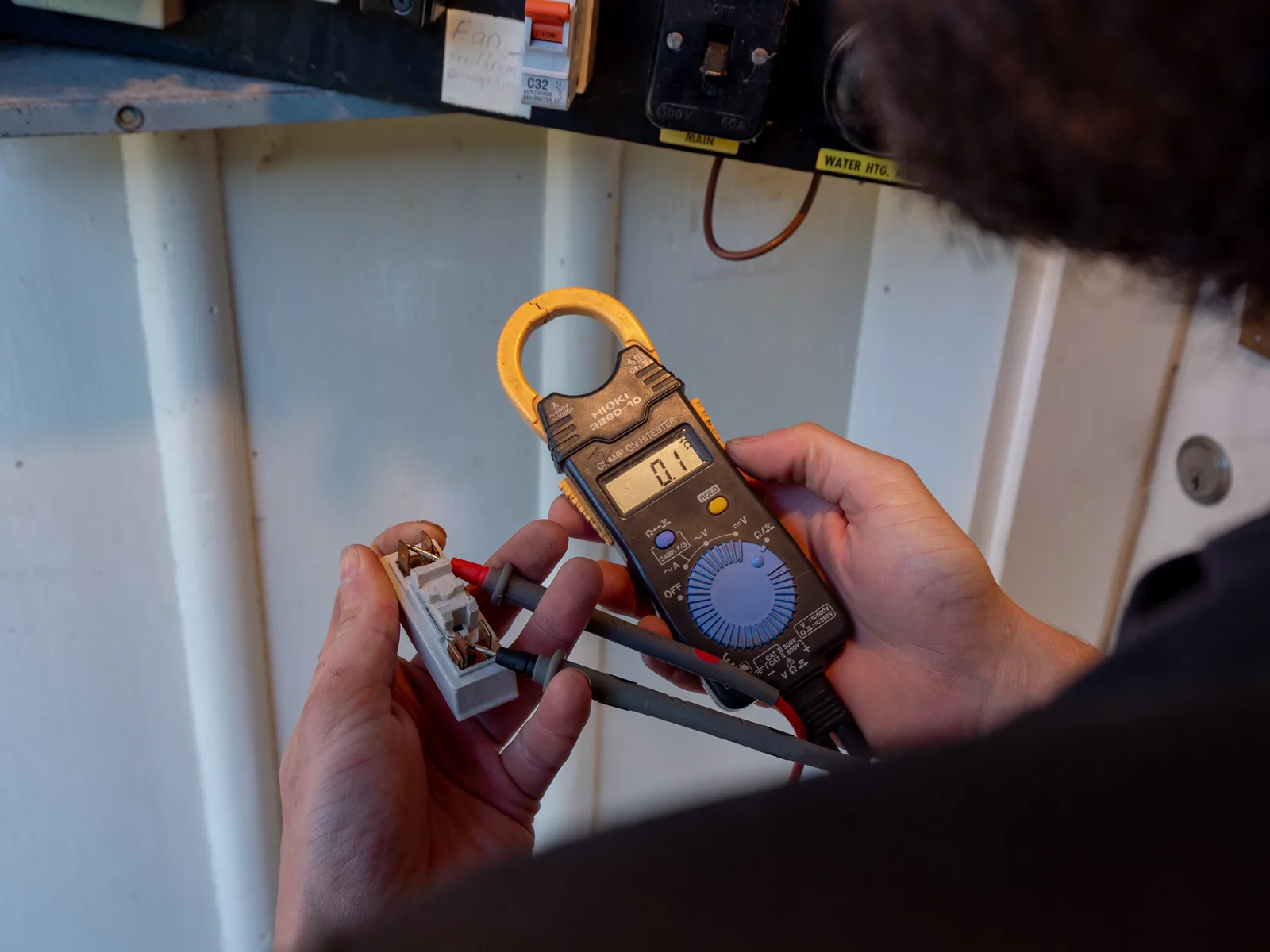
Flickering lights, a switchboard that looks older than the house, or simply not knowing when the wiring was last looked at: these are the usual reasons someone searches "electrical safety check" rather than booking a specific certificate. This post covers what the check actually tests, and how often one is worth doing.
Direct answer: An electrical safety check is a full inspection of a property's wiring, switchboard, earthing and RCD protection, followed by a written report. It is not itself a certificate. There is no single legal interval for an ordinary home; AS/NZS 3019, the New Zealand standard for checking existing installations, says the right frequency depends on the installation's age, use and condition, and recommends a check when a home changes occupants. eCertify's safety check is NZ$249.90 including GST, Auckland wide.
eCertify's safety check covers the installation as a whole, not just the obvious parts:
This is not a visual walk-through. AS/NZS 3000, the wiring rules standard, sets out the minimum inspection and testing an installation needs to be verified as safe (clause 8.1.1). AS/NZS 3017 sets out the actual test methods an inspector uses to check compliance, things like how a polarity test or an insulation resistance test is actually carried out. An RCD, for instance, is not confirmed safe just because its test button works: AS/NZS 3000's New Zealand-specific testing requirement for RCDs (clause 8.3.10) calls for the trip time itself to be measured with an instrument, and for confirmation that the RCD protects against electric shock, including checking for DC leakage current on the newer RCD types fitted alongside solar and EV charging circuits. eCertify's check uses the instrument test, not the test button, for exactly this reason.
Full detail on what is included and the price: eCertify's electrical safety check page.
There is no single legal answer for an ordinary home, and this post will not invent one. New Zealand law (regulation 75 of the Electricity (Safety) Regulations 2010) sets fixed periodic-assessment intervals for specific installation types: caravan parks and boat marinas (5 years), demolition and construction sites, and carnivals and fairgrounds (1 year). An ordinary house or small office is not on that list, so there is no statutory clock running on it.
Instead, the benchmark comes from AS/NZS 3019, the standard that governs checking an existing installation. It sets the interval by the installation's type, use, maintenance history and exposure, rather than a flat number, and gives domestic dwellings as an example where a longer interval, in the order of 10 years, can be appropriate for a well-maintained home with no higher-risk features. The same guidance makes one point plainly: when a home changes occupants, a check is recommended, whatever the previous interval was. That is the same logic behind a pre-purchase inspection, covered in full in our guide to selling or buying a house, and it applies just as much to a long-term rental changing tenants.
A shorter interval is worth considering sooner than the benchmark where any of these apply:
A workplace or office installation is checked the same way a home is: full inspection, instrument testing, written report, same NZ$249.90 including GST fixed price, Auckland wide, no zone pricing. The one change is frequency: AS/NZS 3019 calls for a shorter interval in locations with a higher risk of shock, fire or arc from degradation, or where both high and low voltage equipment is present, which can apply to some commercial sites. A standard office or retail premises with ordinary low-voltage equipment follows the same logic as a home: age, use and condition decide the interval, not a fixed number. eCertify's inspection work covers the standard low-voltage categories it attends; a site with high-voltage equipment or a specialist hazardous area sits outside what eCertify takes on, and is said plainly rather than stretched to fit.
An electrical safety check sometimes finds a real risk: exposed conductors, no earth continuity, or an installation that meets the legal definition of electrically unsafe. New Zealand law does not require an inspector to disconnect the power. What it requires is this: the installation must not knowingly be left in use while unsafe, and if there is an immediate danger to life or property, the inspector must tell both the owner and WorkSafe as soon as practicable, including what has been done about it. In practice, eCertify isolates the affected part of the installation with the owner's permission, which removes the danger, then reports what was found and that it has been isolated. The risk is real; so is the fix, and eCertify tells the client on the spot rather than leaving it in a report they read later.
An electrical safety check is a full inspection and written report on a property's wiring, not a certificate, and it covers the switchboard, earthing, RCD protection and accessible wiring using instrument testing rather than a visual check alone. For an ordinary Auckland home there is no fixed legal interval; AS/NZS 3019 bases the right frequency on the installation's age, use and condition, with a check recommended whenever occupancy changes. eCertify runs this check for NZ$249.90 including GST, Auckland wide, with callout, testing and the report all included.
A safety check produces a written report on condition, not a certificate. A certificate (Electrical Safety Certificate, Certificate of Compliance, or Certificate of Verification) is a separate legal document tied to specific work or a specific installation event, covered on eCertify's certificates page.
No. Old wiring is a reason to check, not proof of a problem on its own, and some older installations test fine. A safety check gives measured readings rather than a guess based on age.
The test button confirms the mechanism moves, not that it trips within a safe time or protects against the newer leakage currents solar and EV charging circuits can produce. An instrument test checks the actual trip time and function, which a button press cannot.
No. Most safety checks find specific faults to fix, not a reason to rewire the whole house. Rewiring is a separate question, covered on eCertify's rewire page.
Not under a specific periodic-assessment law like the ones for caravan parks or construction sites. Rentals carry their own electrical duties, and Healthy Homes covers insulation, heating and ventilation rather than electrical safety.

787 Riddell Road, St Heliers, Auckland 1071
09 302 0884office@ecertify.co.nzFind us on Google MapsGet in touch any time. On-site work runs Monday to Friday, 7am to 5pm.
Our team are fully accredited and qualified electrical professionals.

Copyright © eCertify. All rights reserved.