
A Certificate of Compliance (COC) proves electrical work is safe and lawful. eCertify explains who issues one, what it covers, and what it costs.
If you have just had electrical work done and someone has mentioned a "COC", you are probably wondering whether that is the same thing as the certificate your insurer or lender is asking for. It usually is not quite the same document, and knowing the difference saves you a call to the wrong person.
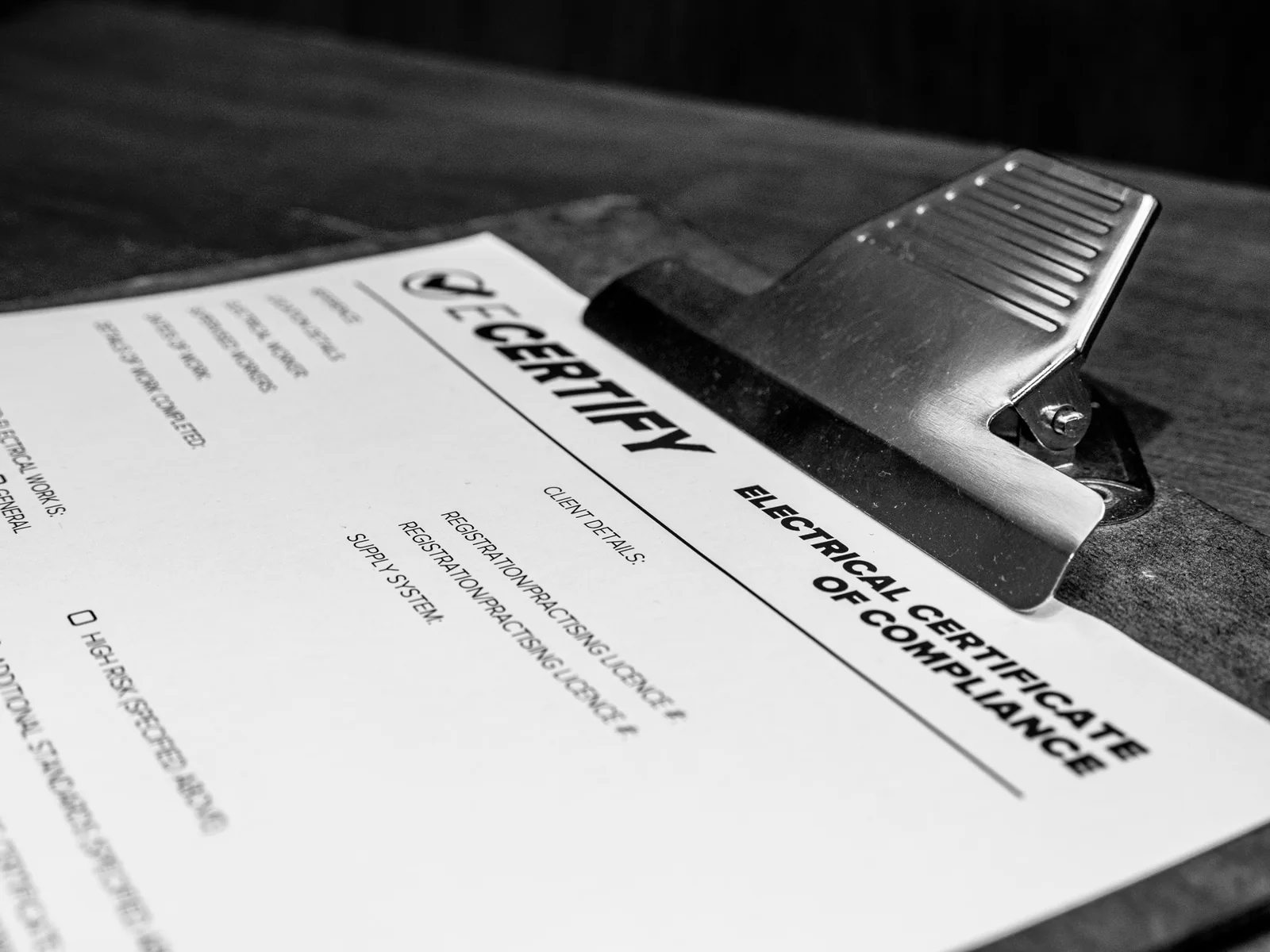
A Certificate of Compliance (COC) is the electrical worker's own written statement that the prescribed electrical work they carried out complies with New Zealand's electrical regulations. It is issued by the electrician who did the work, not by an inspector, and it is required for both general and high-risk electrical work (regulation 65, Electricity (Safety) Regulations 2010). eCertify is Auckland's dedicated certification and inspection specialist, and COC questions are one of the most common things that land in our inbox.
A COC can only be issued by a person authorised to certify that particular kind of electrical work (regulation 68). On ordinary jobs, that is the electrician or the electrical company that did the work.
Where the work is classed as high-risk (mains work, or solar and parallel generation are the two categories eCertify attends), the law goes further: the job is not finished with a COC alone. An independent inspector also has to issue a Record of Inspection (ROI), and by law that inspector cannot be the same person who carried out the work, supervised it, or issued the COC for it (regulation 71). That is the whole reason a dedicated, independent certification business like eCertify exists: an electrician who installed your new switchboard cannot also be the one who signs off on it.
If the job you had done was high-risk and you are trying to work out whether you need an ROI as well as a COC, our post on what an electrical inspection costs walks through which inspection you actually need.
A COC is not a blank sign-off. The regulations require it to state that the electrician is satisfied the work was done lawfully and safely, and it must identify the location of the work, describe what was done, and name the person who issued it (regulations 65 and 66). It is attached to any manufacturer's instructions or certified designs used on the job.
No. A COC records the state of the work on the day it was done, so there is no renewal date on it. What does have a clock on it is how long the electrician has to keep a copy: at least 7 years, and they must hand over a copy within 10 working days if WorkSafe, the Electrical Workers Registration Board, your council, or the person who paid for the work asks for one (regulation 74E).
No. Regulation 74E requires the electrician (or their employer, under an employer licence) to provide you with a copy of the COC within 20 days of completing the work, given to whoever contracted for the work or, if that person cannot be reached, to the occupier or owner. Regulation 74E sets no exception for an unpaid invoice, so a COC cannot lawfully be held back as leverage in a payment dispute. The equivalent duty for an Electrical Safety Certificate, regulation 74G, works the same way and carries no payment exception either, though its deadline is 20 working days after the certificate is issued, not 20 days after the work.
A payment dispute is a separate matter from the certificate duty: the electrician can still chase an unpaid bill through the ordinary channels, just not by withholding your paperwork. Falsely certifying work, or issuing a certificate without being authorised to, is itself a separate offence under the regulations (regulation 69), which tells you how seriously the regulations treat the paperwork.
If you cannot get a copy of a COC that should exist, your first calls are the electrician themselves, then the Electrical Workers Registration Board, which holds the authority to investigate a registered electrician's conduct. eCertify does not issue a COC on someone else's behalf, because only the person who did the work (or their authorised employer) can.
There is no separate "COC fee" from eCertify, because a COC is the responsibility of the electrician who did the work, not something eCertify sells on its own. Where eCertify's fixed prices come in is the certification and inspection work that sits alongside a COC: a Record of Inspection for high-risk work is NZ$349.90 including GST, and our Certificate of Verification and safety-check packages run from NZ$249.90 including GST, depending on what you need. If your situation does not fit one of those, we will assess it and give you an upfront quote before booking.
These four letters cause most of the confusion we see, and insurers and councils do not always help by writing "energy works certificate" in their letters instead of naming the document they mean. In short:
For a side by side comparison of all four in one place, our existing post on which electrical certificate you need covers it, and our certification page lists every document eCertify works with. If you are not sure the work needed a certificate at all, our rewire guide is the place to check that first.
A Certificate of Compliance is the electrical worker's own sign-off that the work they did complies with New Zealand's electrical regulations, not a document an inspector or a certification business issues on their behalf. eCertify, Auckland's dedicated electrical certification and inspection specialist, most often sees COC questions arise around high-risk work, where regulation 71 also requires an independent inspector's Record of Inspection before the job is finished. A COC does not expire, but the electrician has to keep a copy for at least 7 years and produce it within 10 working days of a lawful request. Regulation 74E also requires a copy to be handed to whoever paid for the work within 20 days of completion, with no exception for an unpaid bill, so a COC cannot lawfully be used as payment leverage. If you are stuck without one, the Electrical Workers Registration Board is the right place to escalate to, not a certification company standing in for the original electrician.
If you are holding paperwork you are not sure about, or need an inspection to get a document issued, eCertify is happy to help. Auckland region only.
Not exactly. "Energy works certificate" is the everyday term insurers and councils use for the whole family of documents (COC, ESC, ROI and CoV). A COC is one specific document inside that family. See our energy works certificate and G9 guide for the full explanation.
No. Regulation 74E requires a copy of the COC to be given to the person who contracted for the work (or the occupier or owner, if that person cannot be reached) within 20 days of completing the work. It sets no exception for an unpaid invoice, so a COC cannot lawfully be held back as leverage in a payment dispute. The dispute itself is a separate matter, to be chased through the ordinary channels.
As a rule, eCertify does not sign off homeowner wiring. A small, defined list of work is exempt from needing a registered electrician at all (regulation 57 and section 79 of the Electricity Act 1992), but anything outside that list needs to be done, and certified, by an authorised person.
Only a person authorised to certify that particular kind of electrical work (regulation 68), which in practice means the registered electrician, or their employer under an employer licence, who carried out the job.
At least 7 years, and they must produce a copy within 10 working days if WorkSafe, the Board, the Registrar, your council, or the person who paid for the work asks (regulation 74E).
For high-risk work, yes. The job is not complete until both the COC and the inspector's Record of Inspection are issued (regulation 65).
It is an offence under the regulations to falsely certify work, issue a certificate that does not meet the content requirements, or certify work you are not authorised to certify (regulation 69).
No. The electrician certifies their own work with a COC. For high-risk work, a separate, independent inspector certifies that the work was properly done, and by law cannot be the same person who did or supervised the work (regulation 71).
eCertify issues Records of Inspection, Electrical Safety Certificates and Certificates of Verification as an independent certifier. A COC for new work is issued by the electrician who carried out that work.

787 Riddell Road, St Heliers, Auckland 1071
09 302 0884office@ecertify.co.nzFind us on Google MapsGet in touch any time. On-site work runs Monday to Friday, 7am to 5pm.
Our team are fully accredited and qualified electrical professionals.

Copyright © eCertify. All rights reserved.