
What an Electrical Safety Certificate actually confirms, who has to issue one, the 20 working day deadline, and what eCertify charges. Auckland.
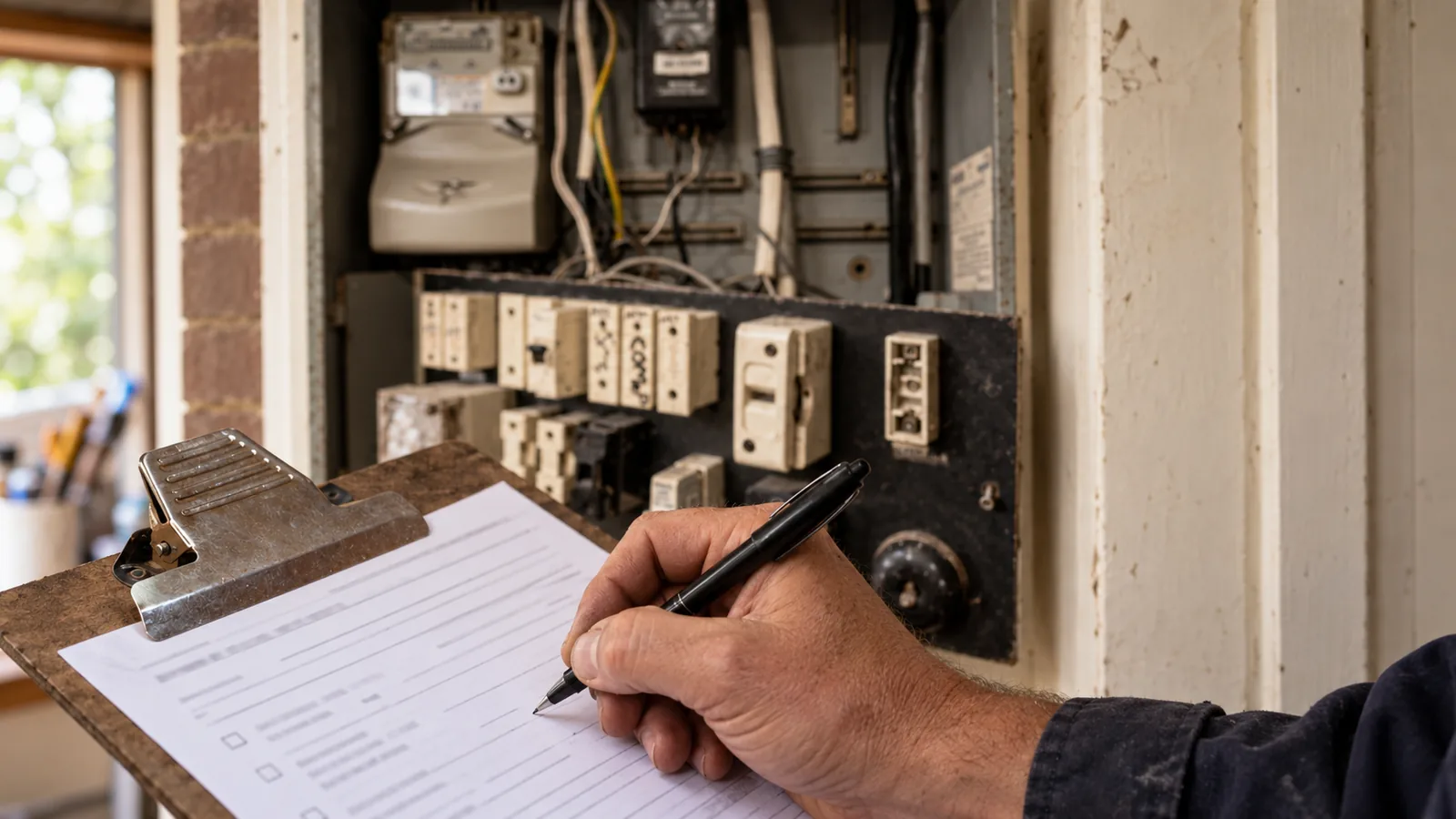
If your insurer, bank, or a buyer's solicitor has asked for "an electrical safety certificate", they want a specific document, and it is worth knowing exactly what it proves before you go looking for one.
An Electrical Safety Certificate (ESC) is the statement, from the person who connected your electrical work to the power supply, that the installation is electrically safe to connect and use. It is required under the Electricity (Safety) Regulations 2010 after prescribed electrical work is done, and eCertify, Auckland's dedicated certification and inspection specialist, is asked to issue or check these regularly.
The person who completed the connection work issues the ESC, once they are satisfied the installation is safe to use and complies with the regulations (regulation 74A). If the installation was disconnected while the work was being done, the certificate follows the reconnection, not the day the tools came out. It has to be issued as soon as practicable, and no later than 20 working days after connection (regulation 74C).
That 20 working day figure is a legal outer limit, not a turnaround promise. It tells you the latest an electrician is allowed to leave it, not how quickly a good one actually gets it to you.
The certificate is not a one-line sign-off. By regulation, it has to:
(All from regulation 74A.) If a certificate someone hands you is missing any of this, it is worth asking why.
An ESC is not only an electrical document. Under the Electricity (Safety) Regulations 2010, an ESC also stands in, for the purposes of the Building Act 2004, as the certificate confirming that prescribed electrical work complies with the building code (regulation 74A). That is why a building consent authority or an insurer will often ask for this document by name rather than accepting a general assurance that "an electrician looked at it." If your letter uses the term "energy works certificate" instead, see our energy works certificate and G9 guide: it usually means an ESC is the document they are after, but not always, and it is worth checking which one before you book.
The person who issued it must retain a copy for at least 7 years, give a copy to whoever contracted the work (or the owner or occupier, if that person cannot be reached) within 20 working days of issuing it, and produce a copy within 10 working days if WorkSafe, the Electrical Workers Registration Board, your council, or the person who paid for the work asks for one (regulation 74G).
eCertify's fixed-price Energy Works Certificate packages cover the inspection and paperwork most people actually need when an ESC is requested: NZ$259.90 including GST for a building consent EWC, and NZ$269.90 including GST where it is your insurer asking. Both are all-inclusive: callout, testing, and the certificate or remedial report if something needs fixing first. Anything outside those two situations gets assessed and quoted upfront, never guessed at.
eCertify serves the Auckland region only.
An Electrical Safety Certificate confirms that a specific piece of electrical work is connected and safe to use, issued by the person who did the connection, within 20 working days at the latest. eCertify, Auckland's dedicated certification and inspection specialist, most often sees ESC requests come from insurers and building consent authorities, because the certificate doubles as the building code compliance record for that work. The fixed prices for eCertify's own ESC-related packages are NZ$259.90 including GST for a building consent job and NZ$269.90 including GST for an insurance letter, both inclusive of callout and testing.
If your insurer or council has asked for an electrical safety certificate, eCertify can inspect and issue it on a fixed, all-inclusive price. Auckland region only.
No. A COC covers whether the work itself complies with the regulations; an ESC confirms the installation is safe to connect and use. See our Certificate of Compliance guide for the COC side of it.
Anyone connecting new or altered electrical work to the power supply. In practice, this is most commonly the document an insurer or lender asks for.
No later than 20 working days after the installation is connected (regulation 74C). This is a legal limit, not how quickly a good electrician works.
Yes, it must identify the location of the installation or part installation it relates to (regulation 74A).
Yes. The certificate must clearly state whether it relates to the whole installation or only specified parts (regulation 74A).
At least 7 years, with a copy produced within 10 working days of a request from WorkSafe, the Board, your council, or the person who paid for the work (regulation 74G).
Often, yes, but not always. See our energy works certificate and G9 guide for how to tell which document your letter actually means.

787 Riddell Road, St Heliers, Auckland 1071
09 302 0884office@ecertify.co.nzFind us on Google MapsGet in touch any time. On-site work runs Monday to Friday, 7am to 5pm.
Our team are fully accredited and qualified electrical professionals.

Copyright © eCertify. All rights reserved.