
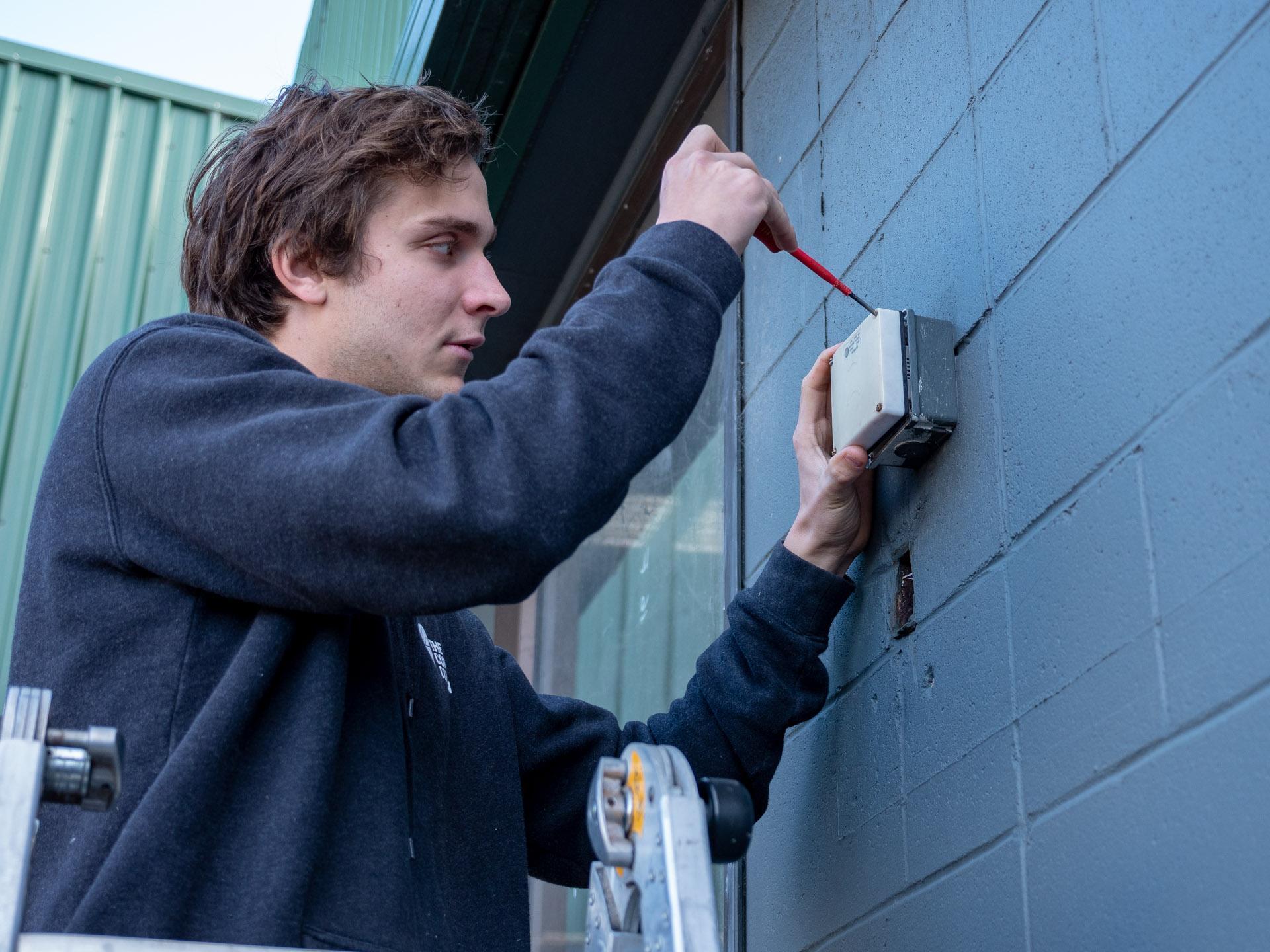
Periodic assessment to AS/NZS 3012 for construction and demolition sites
eCertify carries out periodic electrical assessments of construction and demolition sites across Auckland, to AS/NZS 3012. A registered electrical inspector checks the site's temporary supply, switchboards, construction wiring and fixed RCDs (the safety switches built into the boards), then signs a Record of Assessment.
Regulation 75 of the Electricity (Safety) Regulations 2010 requires a site's owners and operators to have its installation periodically assessed to AS/NZS 3012. AS/NZS 3012 sets that assessment at least every 6 months.
eCertify prices each site assessment by the size of the site and always quotes before booking. Book it with eCertify's 3-monthly test and tag of your tools, leads and portable RCDs, and the two together cost less than booking each separately.
Last reviewed by Jordan Statham, registered electrical inspector (EW129010), 14 November 2026
eCertify's site assessment covers the fixed installation: the parts of the site's power that stay in place while the job runs. That is the installation regulation 75 is about, and the one the Record of Assessment describes.
eCertify's inspector checks:
Power tools, leads and portable outlet boxes are not part of the assessment. They are covered by test and tag, further down this page.
An assessment does not make a site safe on its own. It tells you in writing whether the construction wiring is fit for continued use, and what has to be fixed and by when. That gives you a clear list to act on, signed by a registered inspector.
These are the rules that apply to the electrical installation on an Auckland construction or demolition site. eCertify's site assessment is built around them.
Electricity (Safety) Regulations 2010, regulation 75(1)(c). The owners and operators of low voltage installations at construction and demolition sites must have them periodically assessed in accordance with AS/NZS 3012. The assessment decides whether the installation is electrically safe and otherwise complies with the Regulations.
Regulation 75(2). Only a person authorised to assess prescribed electrical work on that kind of installation, in that location, may carry out the assessment.
AS/NZS 3012:2019, the standard the Regulations cite. Since 13 November 2025 the Regulations have cited AS/NZS 3012:2019, including Amendment 1, with six New Zealand modifications. The earlier 2010 edition could still be followed until the close of 12 November 2026. From 13 November 2026, assessments follow the 2019 edition. The current Regulations are on the New Zealand Legislation website.
Regulation 75(4) and 75(4A): the Record of Assessment. The person who completes the assessment must fill in a record of assessment, state which standard it followed, and give it to whoever asked for it. Where the standard prescribes a form, the record must be on that form. AS/NZS 3012 prescribes the form in its Appendix G. The assessor must keep a copy for at least 3 years, or send a copy to WorkSafe.
Regulation 75(5): the owner's offence. An owner who keeps a site installation in service without the required assessment commits an offence. On conviction it carries a level 1 penalty: a fine of up to $2,000 for an individual, or up to $10,000 for a company (regulation 10). It is also an infringement offence, with a fee of $500 for an individual or $1,000 for a company (regulation 12).
Regulation 25. A construction site is deemed electrically safe if it complies with AS/NZS 3012 and is used in accordance with it.
Health and Safety at Work Act 2015, section 36. A business running the site (a PCBU, the Act's term for a person conducting a business or undertaking) must ensure the health and safety of its workers so far as is reasonably practicable, including safe plant (section 36 of the Act).
The maximum intervals come from Table 6 of AS/NZS 3012. eCertify books its Auckland site assessments and test and tag visits to them. They fall into two groups, and only the first is a legal requirement under regulation 75.
The site installation (regulation 75 and AS/NZS 3012):
Portable equipment (AS/NZS 3012's intervals, not a stand-alone legal requirement):
WorkSafe has said there is no legal requirement to test and tag in-service appliances and leads. On a construction site, 3-monthly test and tag is still AS/NZS 3012's interval, and it is what main contractors expect to see. AS/NZS 3012 also allows a shorter interval where another rule or a manufacturer sets one.
eCertify sends a registered electrical inspector to carry out every site assessment and sign the Record of Assessment. Regulation 75(2) limits the assessment to a person authorised to assess that kind of installation. AS/NZS 3012 Appendix G says the Electrical Workers Registration Board (EWRB) should be consulted on the competency needed, and the form records the assessor's registration type and number.
eCertify's director, Jordan Statham, has been an electrical inspector registered with the EWRB since 2017. eCertify is an Auckland electrical certification and inspection company, a team of registered, fully qualified electricians and inspectors, and it holds a 5.0 rating on Google.
Test and tag of portable equipment is a different job. AS/NZS 3012 asks for a competent person: someone whose training, qualifications or experience give them the knowledge and skill to do the task correctly.
eCertify gives you a signed Record of Assessment on the AS/NZS 3012 Appendix G form. It records:
Switchboards, construction wiring and fixed RCDs are not tagged under AS/NZS 3012, so the Record of Assessment is your evidence that the installation was assessed. Keep it with your site records.
If the assessment finds defects, eCertify can quote the repairs, so the site can be put right and signed off without finding another contractor.
On site you may hear this document called a CoV (certificate of verification). The Regulations and AS/NZS 3012 call it a Record of Assessment, and that is what eCertify issues.
eCertify tests and tags site tools, leads, extension leads, portable outlet boxes and portable RCDs every 3 months, to AS/NZS 3012. Test and tag is not included in the site assessment. Booked together, eCertify quotes the two at a better rate than each on its own.
Each item that passes gets a tag showing who tested it and the test and retest dates. An item that fails is tagged out of service and withdrawn straight away. Under regulation 26 of the Electricity (Safety) Regulations 2010, an appliance used at work with a current AS/NZS 3760 tag is deemed electrically safe.
For offices, workshops and rentals, see eCertify's test and tag service in Auckland.
eCertify prices each construction site assessment by the size of the site and quotes before booking. Sites range from a single builder's temp to several boards on a commercial job, so there is no one fixed price. To quote, eCertify needs the site address, the type of site, whether a temporary supply is already in place, and how many site switchboards there are. The enquiry form below asks for each of these.
Adding 3-monthly test and tag to the same booking lowers the combined rate. For eCertify's fixed prices on other inspections, see the electrical inspection cost guide.
At least every 6 months for the switchboards and construction wiring, under regulation 75 of the Electricity (Safety) Regulations 2010 and AS/NZS 3012. Fixed RCDs also need a trip-time test at least every 12 months. eCertify writes the next due date on every Record of Assessment.
Only a person authorised to assess that kind of installation, under regulation 75(2). eCertify sends a registered electrical inspector, who signs the Record of Assessment with their registration type and number.
eCertify gives you a signed Record of Assessment on the AS/NZS 3012 Appendix G form. It lists what was assessed, any defects and the dates to fix them, and when the next assessment is due.
No. The assessment covers the fixed installation: switchboards, construction wiring and fixed RCDs. Test and tag covers portable gear such as tools, leads and portable RCDs, every 3 months under AS/NZS 3012. eCertify does both and quotes them together at a better rate.
On site the 6-monthly document is sometimes called a CoV. The Electricity (Safety) Regulations 2010 and AS/NZS 3012 call it a Record of Assessment, on the form in AS/NZS 3012 Appendix G. That is the document eCertify issues.
AS/NZS 3012 is the standard for electrical installations on construction and demolition sites, and for testing the equipment used on them. The Electricity (Safety) Regulations 2010 cite the 2019 edition, including Amendment 1. eCertify assesses Auckland sites to it.
eCertify assesses the electrical installation on Auckland construction and demolition sites to AS/NZS 3012, as regulation 75 of the Electricity (Safety) Regulations 2010 requires of the site's owners and operators. A registered electrical inspector checks the temporary supply, switchboards, construction wiring and fixed RCDs at least every 6 months and signs a Record of Assessment on the Appendix G form. Test and tag of tools, leads and portable RCDs every 3 months is a separate service, and eCertify quotes the two together at a better rate. Every site is priced by its size and quoted before booking.
Tell eCertify where the site is, what kind of job it is, and how many site switchboards it has. The eCertify office will quote the assessment, with 3-monthly test and tag if you want it, before anything is booked. Prefer to talk? Call eCertify on 09 302 0884. Auckland region only.

787 Riddell Road, St Heliers, Auckland 1071
09 302 0884office@ecertify.co.nzFind us on Google MapsGet in touch any time. On-site work runs Monday to Friday, 7am to 5pm.
Our team are fully accredited and qualified electrical professionals.

Copyright © eCertify. All rights reserved.